Intermediate habitat with small rocks interspersed with sand. Occurs mainly at depths
of 10–20 m, with a recorded range from approximately 4 to 30 m.
Geographic distribution:
Lake Malawi around the islands of Maingano, Mbamba, Masimbwe and Mbuzi near Likoma
Island. Additional populations occur along the Mozambican coast around Londo and
Lumbaulo.
Typical adult size:
Wild specimens usually reach about 9 cm total length. In aquarium conditions,
individuals may grow substantially larger, reaching up to 15 cm when abundantly fed.
Sexual dimorphism:
Males are larger and show a more intense blue coloration. Females are generally
greyish, with a yellow anal fin, shorter fins and smaller ocelli; older females may
develop a pale blue coloration.
Recommended aquarium size:
At least 250 liters, with larger aquaria (300–500 liters or more) preferable for
long-term maintenance of multiple males.
Aquarium setup:
An aquarium with numerous rocks and shelters is required. Territories are established
around rock-associated sand patches used for spawning. Recommended stocking is one
male with at least three to four females, or larger groups such as several males with
a higher number of females. Aggression is mainly directed toward conspecifics, while
other species are usually tolerated.
Diet:
Primarily herbivorous, feeding on Aufwuchs in the wild. Natural diet may also include
plankton when available. In aquarium conditions, a vegetable-based diet is essential,
and overfeeding should be avoided.
Breeding:
Maternal mouthbrooder. Males excavate pits beneath or alongside rocks and defend
territories centered on these spawning sites. Females incubate the eggs orally after
spawning, while males remain territorial after the breeding event.
Aggression:
Generally relatively peaceful compared to many other mbuna, but can be highly
aggressive toward conspecifics, especially between territorial males.
Special notes:
The melanic pattern and overall coloration vary
according to geographic origin; populations from Mozambique usually show thinner
vertical bars, while some insular populations may appear darker overall. Despite strong
territoriality, males can maintain very small territories, allowing multiple males to
coexist in adequately structured aquaria. Closely related species should be avoided to
reduce competition and the risk of hybridization.
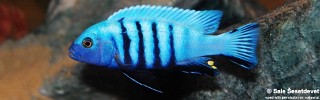
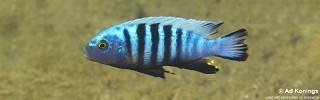
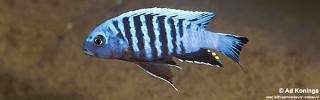
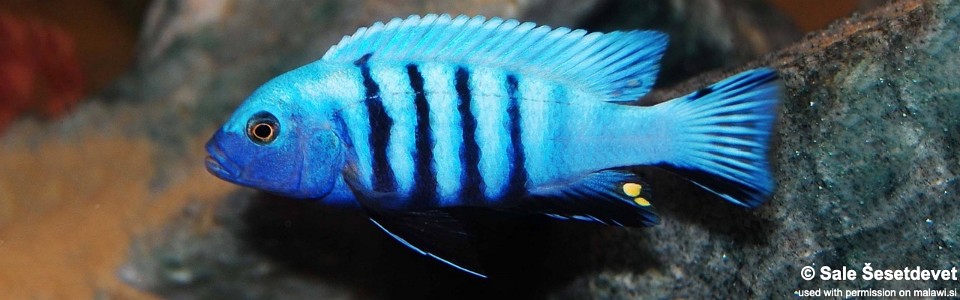




Photo gallery