Shallow intermediate habitat among small to pebble-sized rocks,
from the surface down to about 9 m depth, most commonly between
3–6 m.
Geographic distribution:
Recorded from Monkey Bay, Tsano Rocks, Thumbi West Island,
Nankoma and Maleri; additional records include Gome and Thumbi
Point in Tanzania.
Typical adult size:
Approximately 12 cm total length in the wild.
Sexual dimorphism:
Males are larger with longer fins and display blue coloration
with a yellow throat; females are brown and show vertical barring.
Recommended aquarium size:
An aquarium volume of at least 500 L or more is recommended.
Aquarium setup:
Provide extensive rockwork with numerous gaps and crevices for
territory formation. To maintain more than one active male, a
minimum tank length of around 2 m is necessary.
Diet:
Feeds mainly on algae and maintains algal gardens; stomach
contents also included invertebrates. In the aquarium, a primarily
vegetable-based diet is recommended.
Breeding:
Maternal mouthbrooder. Both sexes may hold territories. Gravid
females leave their territories to spawn, and some have been
observed defending territories while brooding. After spawning, the
female incubates the eggs alone.
Aggression:
Among the most aggressive mbuna species; both males and females
defend feeding territories and algal gardens against intruders.
Special notes:
Member of the “dolphin mbuna” group characterized by an
elongated snout. Closely related to P. fuscus and
P. sp. ‘aggressive grey’, and known for the development
of strongly defended algal gardens within its territories.
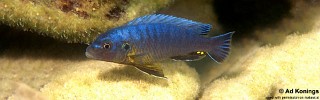
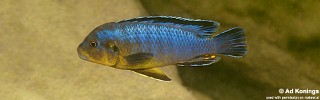
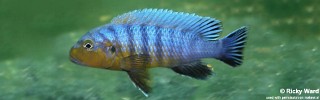
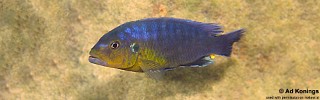
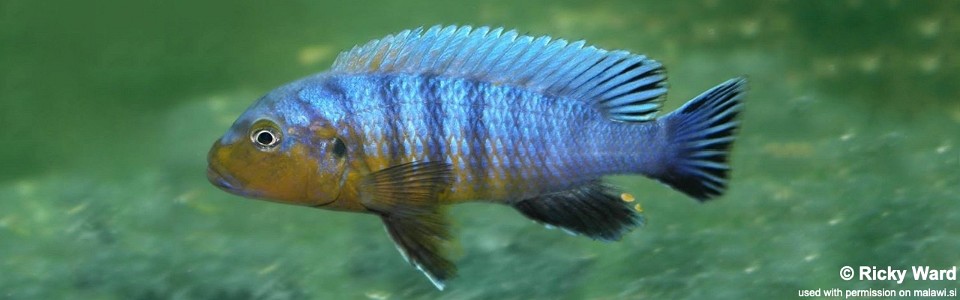




Photo gallery