Muddy habitats in both shallow and deep water.
Occurs at depths from about 5 m down to over 100 m.
Requires substrates rich in mud and snails.
Geographic distribution:
Lake-wide distribution throughout Lake Malawi.
Typical adult size:
Males up to about 30 cm total length.
Females up to about 20 cm.
Sexual dimorphism:
Males grow larger and develop breeding coloration.
Females remain smaller and resemble non-breeding males.
Recommended aquarium size:
At least 1000 L.
Aquarium setup:
Large aquarium with extensive open areas.
Soft substrate (sand/mud) is essential.
Provide ample space rather than dense rockwork.
Diet:
Carnivorous, specialized molluscivore.
Feeds mainly on snails.
Uses powerful jaws and pharyngeal teeth to crush smaller shells,
while extracting snails from larger shells.
Breeding:
Maternal mouthbrooder.
Lives in large schools, often exceeding 100 individuals.
Usually only one male in a school shows breeding coloration.
Breeding males become territorial and clear spawning platforms
in muddy substrate, often marked by heaps of empty snail shells.
Mouthbrooding females remain within the school.
Aggression:
Generally a relatively peaceful cichlid.
Can be highly aggressive toward very similar-looking species.
Not recommended to keep together with other Chilotilapia species.
Special notes:
Notable for its highly specialized dentition adapted to snail crushing.
One of the few Malawi cichlids with such extreme molluscivorous adaptations.
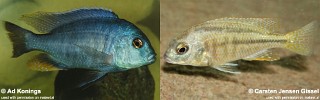
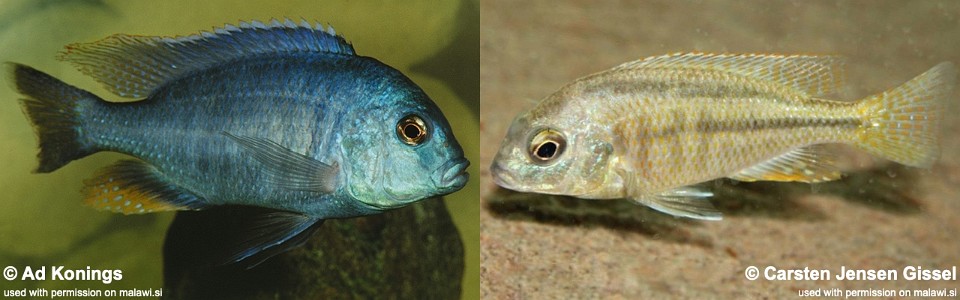




Photo gallery