Sand/rock interface (intermediate habitat). Typically 10–25 m depth; can be deeper than 20 m in very clear water,
and shallower (about 10–15 m) where softer/muddy substrates occur.
Geographic distribution:
Endemic to Lake Malawi. Occurs around Likoma and Chizumulu Islands (Malawi), at Cobwè (Mozambique),
and between Makonde and Manda along the Tanzania shore.
Typical adult size:
Males up to about 14 cm (Chizumulu) and about 12 cm (Likoma). Females smaller, up to about 10 cm.
Sexual dimorphism:
Breeding males: black ventral body with a blue-to-white blaze above the lateral line, extending to the posterior
end of the dorsal fin and onto the upper margin of the caudal fin. Females: beige/silvery ground colour with
three black blotches; females cannot be reliably separated from those of C. verduyni.
Recommended aquarium size:
Minimum 400 litres; aquarium length at least 140 cm
Aquarium setup:
Provide a large sandy foreground interrupted by a few larger rocks while keeping
open sand areas. Moderate current; excellent filtration and water quality.
Stocking: 1 male with 2–3 females; avoid keeping multiple adult males together.
Diet:
Carnivorous. Feeds on plankton in the water column near the bottom and on benthic invertebrates/micro-organisms
picked from soft substrate; rarely more than about 1 m above the bottom.
Breeding:
Maternal mouthbrooder. Territorial males are burrow spawners: they excavate under a rock and deposit sand/mud
in front to form a semi-circular raised entrance; spawning occurs beneath the rock.
Incubation averages ~21 days (range ~18–24 depending on temperature). No postnatal care; fry released in schools.
Aggression:
Mild intra-specific aggression; otherwise generally peaceful. Adult males are largely territorial.
Best kept with similarly calm species (e.g., other utaka and Aulonocara); avoid look-alike species and very aggressive tankmates.
Special notes:
Member of the informal Copadichromis mbenjii group. Diagnostic characters include three lateral body spots and
specific relationships of supra-pectoral and supra-anal spots to the lateral line; lacks a narrow black submarginal band in the dorsal fin (vs. C. atripinnis).
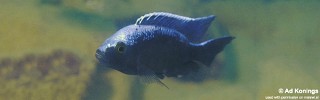
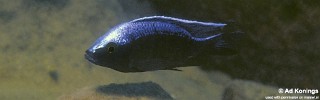
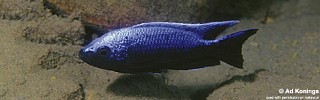
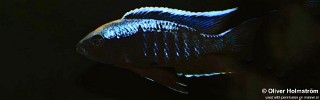
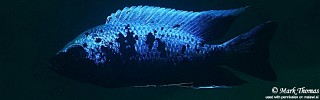
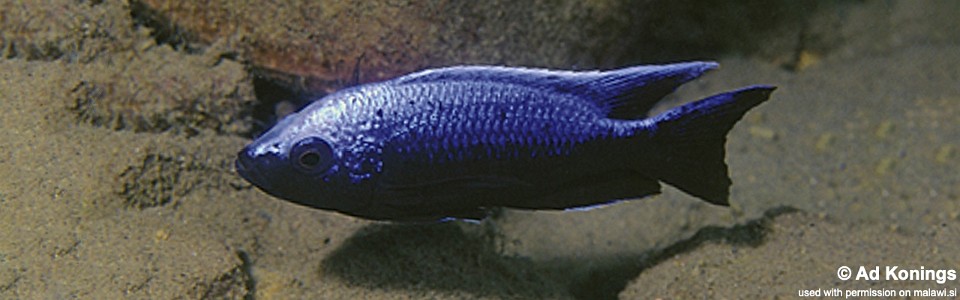




Photo gallery