Primarily sandy habitats, often among schools of sand-dwelling cichlids.
Breeding takes place near rocks in intermediate habitats. Prefers shallow water
but may occur at greater depths.
Geographic distribution:
Lake Malawi; widespread throughout the lake, particularly common at small rocky
areas bordering extensive sandy coasts.
Typical adult size:
Males up to approximately 19 cm total length; females remain about one third
smaller.
Sexual dimorphism:
Males grow significantly larger than females. Breeding males may show subtle
variation in coloration; males from the east coast near Masinje may develop a
whitish blaze on the head and nape.
Diet:
Specialized scale-eater. Feeds primarily on the small scales of the fins and
caudal peduncle of sand-dwelling haplochromines (Mylochromis).
Breeding:
Breeding males are present year-round. Males aggressively defend territories on
top of rocks. Females visit territorial males to spawn. Mouthbrooding females
later gather in small groups.
Aggression:
Males are strongly territorial, with aggression mainly directed toward
conspecific males. Other species are chased primarily during spawning.
Special notes:
Exhibits mimicry, blending visually with sand-dwelling cichlids to enable surprise
attacks on unsuspecting prey. Distinguished from Corematodus shiranus by the
presence of a diagonal stripe (vertical bars in C. shiranus).
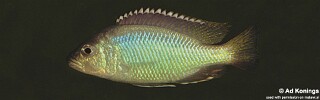
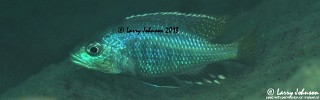
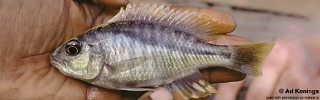
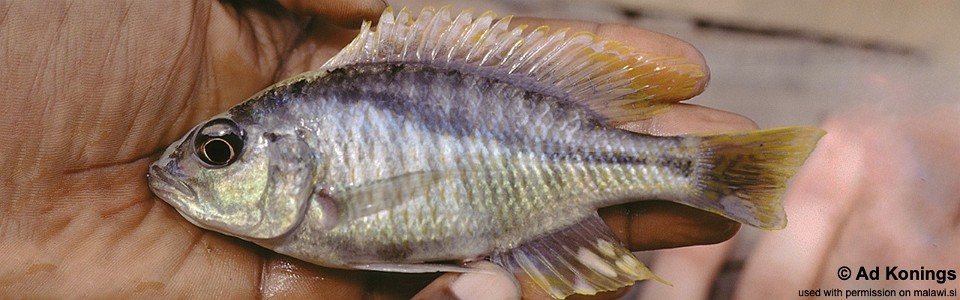




Photo gallery