Shallow sandy bays near the shoreline; typically found over sandy bottoms
at depths of approximately 3–15 m, often in association with large
sand-sifting cichlids.
Geographic distribution:
Lake Malawi and Lake Malombe, East Africa.
Typical adult size:
Males up to about 22 cm; females up to about 18 cm.
Sexual dimorphism:
Minimal. Both sexes share the same blue coloration; males develop a
pronounced frontal gibbosity (forehead hump), which consists of a
jelly-like tissue and is not supported by bone or cartilage.
Recommended aquarium size:
Minimum 600 litres; aquarium length at least 180 cm.
Aquarium setup:
Large sandy areas with scattered large rocks, leaving ample open swimming
space. Planting of Vallisneria in parts of the aquarium is beneficial.
Keep a single male with several females (5–6).
Diet:
Carnivorous; feeds on invertebrates, small crustaceans, and microorganisms.
In nature it often follows large sand-sifting cichlids and feeds on food
items exposed or expelled during their foraging.
Breeding:
Maternal mouthbrooder. Breeding is relatively primitive; spawning may occur
without a fixed territory. Eggs are usually fertilized outside the female’s
mouth, though internal fertilization has also been observed. Mouthbrooding
females are rarely seen.
Aggression:
Moderately aggressive; aggression is mainly related to territorial defense,
especially by males. In aquaria males are almost permanently territorial.
Special notes:
Easily recognized by its uniform blue coloration and distinctive frontal
hump. Often follows large sand-grubbing cichlids as a “freeloader”.
Assessed as Least Concern (LC), though populations have declined locally
due to overfishing.
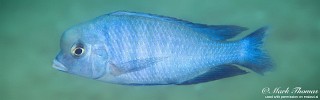
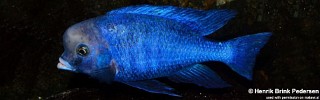
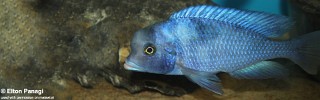
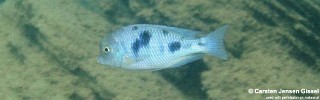
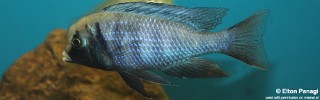
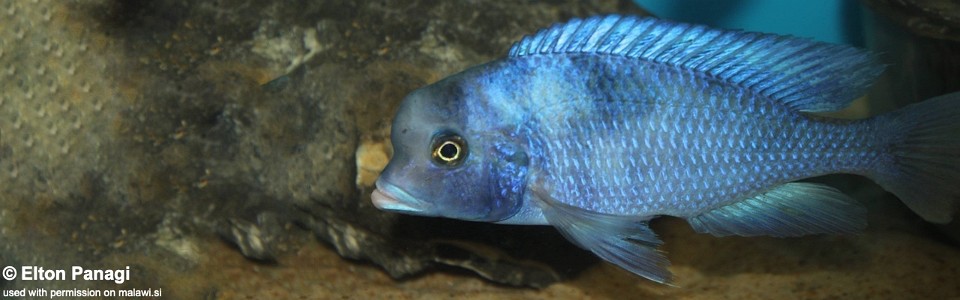




Photo gallery