Shallow, sediment-rich bays with dense vegetation, especially Vallisneria beds; typically 1–10 m depth.
Non-breeding individuals may occasionally occur in the intermediate habitat (reported at Chizumulu Island).
Geographic distribution:
Lake-wide distribution in Lake Malawi (also occurs in Lake Malombe).
Typical adult size:
Males up to about 23 cm; females up to about 18 cm.
Sexual dimorphism:
Males are larger. Females and non-breeding males are usually silvery, but some populations (e.g. Chizumulu Island,
Cobwé and possibly introduced Nkhata Bay) show a golden-yellow coloration. Breeding males show a strongly laterally
compressed body with greenish horizontal striping; in parts of the southeastern arm and Lake Malombe males may show
more red in the anal fin than elsewhere.
Recommended aquarium size:
Minimum 600 litres; aquarium length at least 180 cm.
Aquarium setup:
Large open sandy areas planted with vegetation (Vallisneria strongly recommended); only minimal rockwork.
Best kept as 1 male with 2–3 females; larger groups only in very large aquaria.
Choose tankmates carefully—compatible with larger, calmer Malawi cichlids; avoid small species that can be preyed upon.
Diet:
Carnivorous predator; primarily hunts small fishes, especially juvenile utaka and other schooling cichlids.
Ambushes prey among plants, often adopting a head-down posture before striking.
Breeding:
Maternal mouthbrooder. Territorial males prepare a shallow depression in the sand as a spawning site, often between
plant beds (sometimes near driftwood or under overhangs). Females brood alone and commonly release fry among schools
of juvenile utaka within the vegetation.
Aggression:
Generally peaceful toward similarly sized fishes; males can be territorial. Not suitable with smaller species due to
predatory behavior.
Special notes:
Distinguished from most Malawi cichlids by its extremely laterally compressed body, very long snout, pronounced chin,
and greenish horizontal striping. It typically shows two horizontal bands; other Dimidiochromis species usually show
only the mid-lateral band plus blotchy dorsal-base markings. Assessed as Least Concern (LC), though vegetated habitats
can be damaged by beach seining.
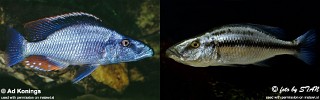
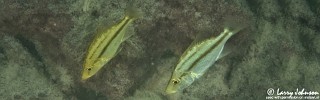
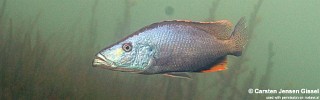
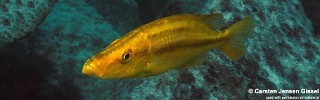
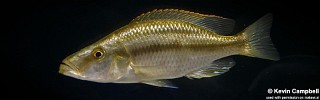
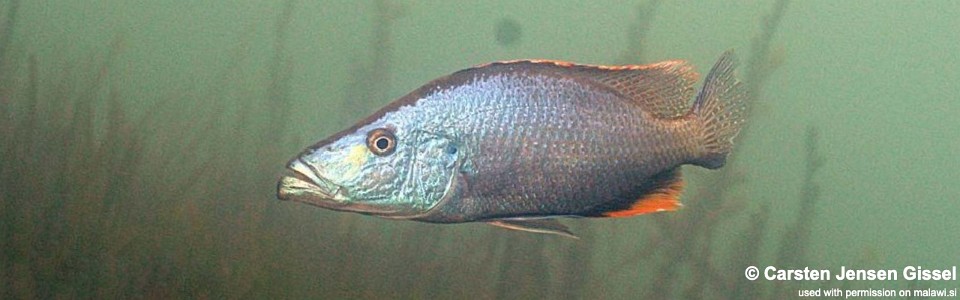




Photo gallery