Near Langenburg (Lumbila), Lake Nyasa (Lake Malawi), Tanzania
Biotope:
Shallow, sediment-rich shoreline zones; mid-water inhabitant often associated with rocky substrates,
but requiring sandy areas for bower construction. Found at depths of approximately 1–15 m.
Geographic distribution:
Lake Malawi basin; occurs throughout Lake Malawi and also in Lake Malombe.
Typical adult size:
Males slightly over 30 cm total length; females nearly as large, up to about 27 cm.
Sexual dimorphism:
Females and non-breeding males are silvery with a greenish hue.
Males develop stronger coloration during breeding and attain slightly larger size.
Recommended aquarium size:
Minimum 1000 litres; very large footprint required due to size and activity level.
Aquarium setup:
Large open swimming areas with fine sand substrate and a few large rocks.
Long aquarium (ideally 300 cm or more) is essential for natural behavior.
Diet:
Carnivorous predator; feeds mainly on small fishes such as utaka juveniles and the lake sardine
(Engraulicypris sardella), but also consumes snails and larger invertebrates.
Breeding:
Maternal mouthbrooder. In rocky habitats males defend rock-based territories;
in sandy areas they construct large sand-castles. Females release fry in mid-water
and care for them for at least three weeks after first release.
Aggression:
Robust and potentially aggressive, especially during breeding.
Strongly predatory; unsuitable with small or peaceful species.
Special notes:
Easily recognized by its constant mid-water swimming behavior, unlike other
Dimidiochromis which are more bottom-oriented.
Often hunts cooperatively in packs, chasing prey to the water surface.
Although listed as Least Concern (LC), it is heavily fished due to excellent taste
and is typically caught by hook and line.
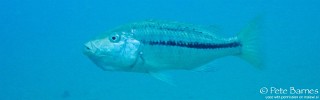
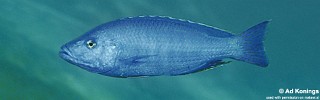
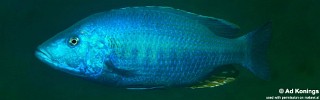
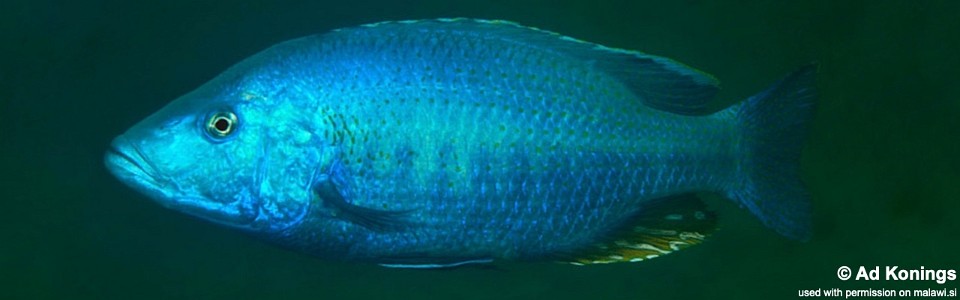




Photo gallery