Shallow, sediment-rich bays, usually with aquatic vegetation such as Vallisneria;
found at depths of approximately 1–15 m.
Geographic distribution:
Occurs throughout Lake Malawi and also in Lake Malombe.
Typical adult size:
Males up to about 25 cm total length; females approximately 25% smaller.
Sexual dimorphism:
Males grow larger and develop more pronounced coloration during breeding;
females remain smaller and less intensely coloured.
Recommended aquarium size:
Minimum 600 litres; very large footprint strongly recommended.
Aquarium setup:
Large sandy areas planted with aquatic vegetation (preferably Vallisneria);
only a few rocks for structure. Aquarium length at least 180–200 cm.
Diet:
Carnivorous predator; primarily feeds on fish (especially utaka juveniles),
occasionally also on larger invertebrates.
Breeding:
Maternal mouthbrooder. Males dig large spawning craters in sand between vegetation
and defend territories spaced several meters apart. Females brood eggs in the mouth;
very large broods have been recorded in captivity.
Aggression:
Generally peaceful toward similarly sized species, but strongly predatory.
Unsuitable with small fish which will be eaten.
Special notes:
Characterized by a very large, oblique mouth and a single mid-lateral stripe.
Despite its size, it inhabits extremely shallow water.
Vulnerable to overfishing in areas where beach seines are used, and now rare
in parts of its former range.
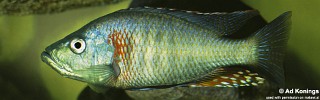
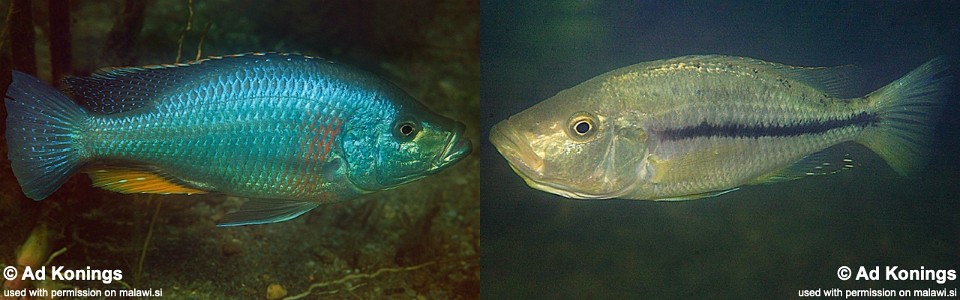




Photo gallery