Open deep-water habitats, typically never shallower than 20 m and
recorded to depths exceeding 120 m. The species inhabits the free water
column and does not enter shallow areas.
Geographic distribution:
Lake-wide distribution throughout Lake Malawi.
Typical adult size:
Up to about 18 cm total length; the largest individuals are usually
females.
Sexual dimorphism:
No clear difference in adult size between males and females has been
established, although the largest specimens are typically females.
Feeding:
Primarily a zooplanktivore feeding on copepods; juveniles also consume
chaoborid larvae. Remains of Engraulicypris sardella have been found
in stomach contents, indicating occasional piscivory.
Breeding:
A free-water spawning maternal mouthbrooder. Ripe males and spent
females occur year-round at various depths. Small juveniles of about
3 cm have been found inside the mouths of females, suggesting
post-release care.
Aquarium setup:
Occasionally introduced to the hobby from juveniles taken from
mouthbrooding females, but little is known about its long-term behaviour
in captivity.
Special notes:
A small, elongate species lacking body spots or stripes. It differs
from congeners by its smaller head, shallow body and higher lateral line
scale count (36–39). Distinguished from Rhamphochromis by its
small mouth, closely set teeth and absence of beak-like premaxillaries.
It is the most abundant haplochromine cichlid in the southeastern arm of
the lake and forms an important component of the open-water fish
biomass.
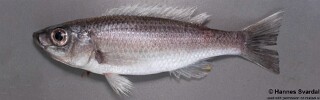
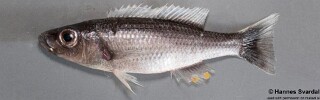
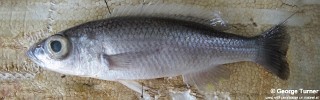
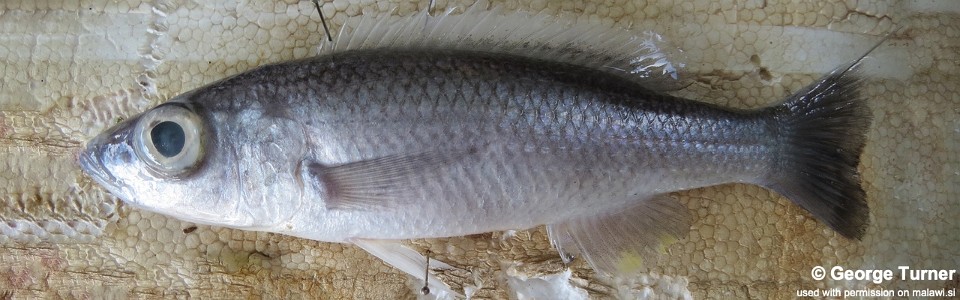




Photo gallery