Sandy habitats in shallow to deeper waters over open
sand. Found mainly above sandy bottoms where it feeds
by sifting the substrate.
Geographic distribution:
Endemic to Lake Malawi, where it occurs in suitable
sandy habitats across the lake.
Typical adult size:
17 cm / 13 cm
Sexual dimorphism:
Males are larger than females and develop more intense
coloration during breeding, often showing blue or
yellowish hues. Females remain smaller and more
subdued in colour.
Recommended aquarium size:
500 L
Aquarium setup:
Provide extensive sandy substrate with fine sand.
Break sandy areas with a few larger rocks while
maintaining large open sand zones. Keep one male
with several females and house only with other
peaceful cichlids.
Diet:
Carnivorous. Feeds on invertebrates, small crustaceans
and insect larvae extracted from the sand by sifting
mouthfuls of substrate.
Breeding:
Maternal mouthbrooder. Spawning takes place on sandy
substrate, with males defending a spawning site while
courting females in the surrounding area.
Aggression:
Peaceful within the species and towards other species.
Due to low intraspecific aggression, several males may
display breeding coloration simultaneously in a group.
Special notes:
A specialised sand-sifting cichlid adapted to open
sandy habitats, where it forages in loose groups.
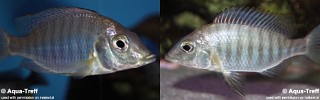
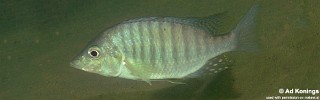
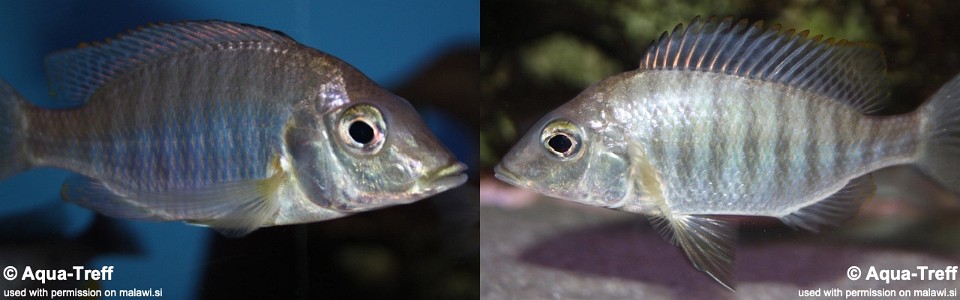




Photo gallery