Intermediate habitat at the rock–sand interface, also
occurring in purely rocky areas.
Geographic distribution:
Originally occurred only at Likoma Island, but was later
also introduced to Thumbi West Island.
Typical adult size:
Maximum recorded size is about 11–12 cm total
length in the wild. In aquarium conditions individuals
may reach at least 14 cm total length.
Sexual dimorphism:
Males are larger, darker and develop markedly longer
unpaired fins, especially the caudal fin. Females are
yellow to yellow-white and more slender, with the
melanin pattern mainly visible in the dorsal fin.
Recommended aquarium size:
An aquarium volume of 300 L is recommended.
Aquarium setup:
Provide rock structures with caves and open sandy areas.
In larger aquaria several males may be maintained with
multiple females.
Diet:
Omnivorous. Feeds on attached algae from rocks and sand
substrate as well as on plankton. In captivity accepts
various foods but should be offered mainly vegetable-
based items to avoid obesity.
Breeding:
Maternal mouth-brooder. Males excavate a pit beneath a
stone and attract females by display. Spawning occurs
in the prepared site and females incubate eggs and fry
in the mouth for about 3 weeks.
Aggression:
Considered one of the more peaceful mbuna. Males are
weakly territorial but generally less aggressive than
many related species.
Special notes:
Member of the P. johannii species group together with
P. johannii, P. cyaneorhabdos and
P. interruptus. Historically placed in
Melanochromis due to superficial resemblance,
but later reassigned to Pseudotropheus.
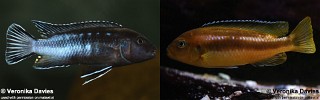
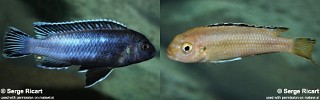
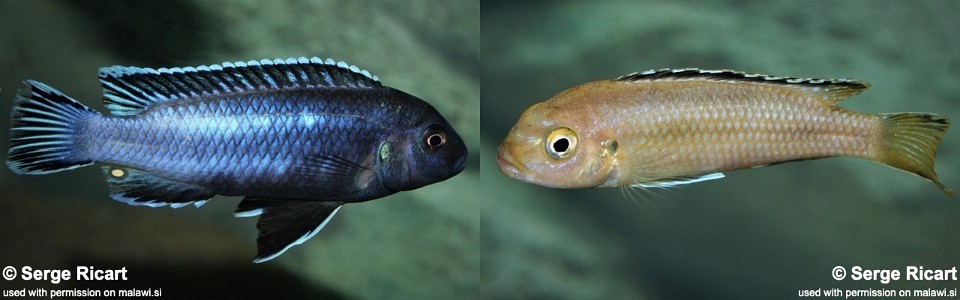




Photo gallery