Endemic to Chinyamwezi Island at the southern end
of Lake Malawi.
Biotope:
Sediment-free rocky habitat with broken rocks of
varying sizes; most individuals occur among medium-sized rocks.
Found from the surface down to at least 30 m, most commonly
between 5 and 20 m.
Typical adult size:
Up to approximately 12–13 cm TL in males;
females smaller.
Sexual dimorphism:
Males steel blue in relaxed coloration with
orange-yellow head and chest; longer fins and larger anal
ocelli. Females beige to yellow in normal morph. OB
(orange-blotched) morph common in females and occasionally
present in males, the latter showing bluish hues within the
blotches.
Recommended aquarium size:
A large aquarium of at least 400 L is required;
tanks over 500 L and at least 200 cm in length are
recommended if more than one male is to be kept.
Aquarium setup:
Rocky setup with numerous caves, crevices and visual
barriers to break line of sight. Provide extensive territories
and stable rockwork; strong filtration and regular water changes
essential.
Diet:
Primarily aufwuchs grazer; also consumes plankton
when available. In aquarium, feed a diet rich in vegetable
matter to prevent obesity and digestive issues typical of
mbuna.
Breeding:
Maternal mouthbrooder. Males excavate a pit beneath
a stone and defend a territory aggressively during spawning.
Incubation lasts about 3 weeks. Fry are
released within about a week thereafter.
Aggression:
Highly territorial and among the more aggressive
members of the genus, especially towards conspecifics.
Special notes:
One of the few Tropheops species exhibiting
frequent OB morphs in females and occasionally in males.
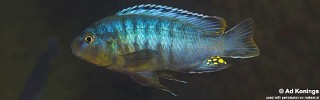
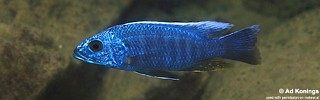
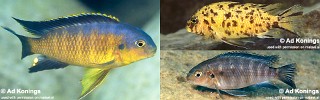
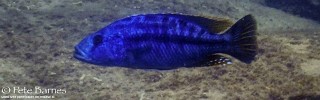
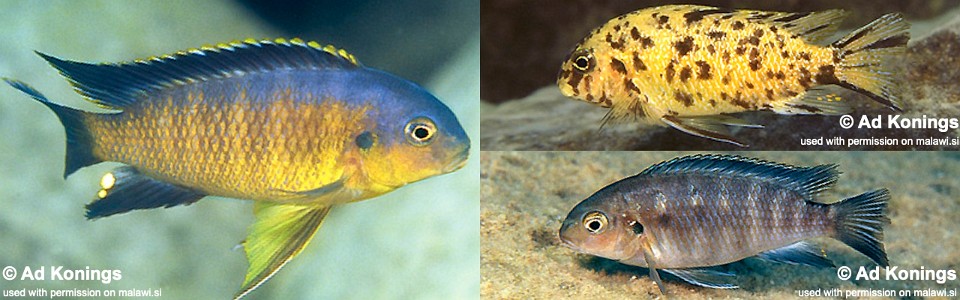




Photo gallery