Usually encountered in very shallow water, particularly in intermediate habitats,
sandy transition zones and near river estuaries. It is also observed in vegetated areas
and along sand–rock transition zones.
Geographic distribution:
Lake-wide in Lake Malawi and also present in rivers flowing into the lake,
including river mouths and estuarine areas.
Typical adult size:
Males reach approximately 45–50 cm total length, while females may attain
up to about 40 cm.
Sexual dimorphism:
Males grow larger than females. Mouthbrooding females are rarely observed and
have been seen hiding in caves. Fry-guarding females may accompany broods
exceeding 500 fry.
Recommended aquarium size:
A minimum aquarium volume of 2000 l with a tank length of at least 4 m
and a depth of not less than 1 m is recommended.
Aquarium setup:
A layout dominated by extensive sandy areas is required, optionally combined
with large rock structures, broad transition zones and shaded retreat areas.
Sand–shore style layouts or intermediate zones with wide crevices and passages
are suitable.
Diet:
Piscivorous predator feeding on mbuna and smaller non-mbuna species. In
aquaria a strongly protein-based diet is required, including live or frozen
foods. Smaller tankmates are likely to be regarded as prey.
Breeding:
Maternal mouthbrooder. Fry-guarding females with large broods are observed
in shallow intermediate habitats.
Aggression:
Highly assertive and predatory. It should only be maintained with similarly
large and robust species, as significantly smaller fishes are typically
treated as prey.
Special notes:
A non-endemic species locally known as “Sungwa”. It also occurs widely in
southern and central Africa outside Lake Malawi. It has been suggested that
Serranochromis-like ancestors may have played a role in the early evolution
of some endemic Malawi cichlid lineages.

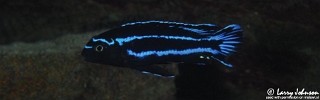
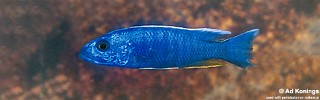
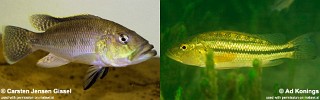
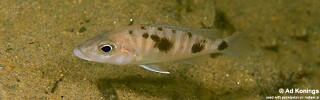
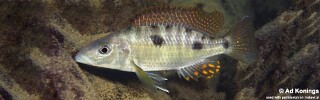
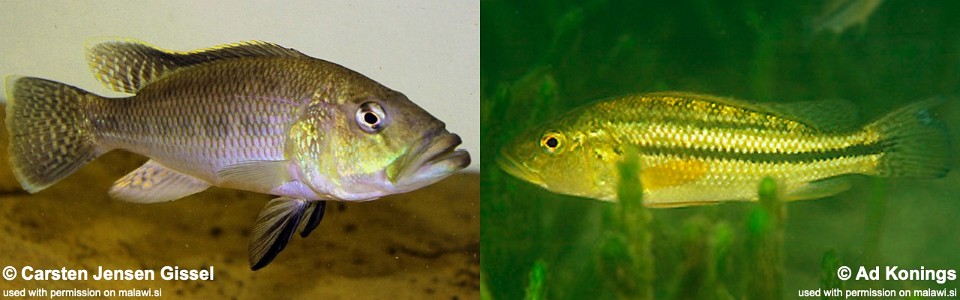



Photo gallery