Originally occurred only around Chizumulu Island, but was
later introduced at Nkhata Bay and Thumbi West Island.
Typical adult size:
In the wild males attain about 8 cm total length, with
females remaining approximately 10% smaller. In aquarium
conditions both sexes may exceed 10 cm total length.
Sexual dimorphism:
Breeding males are almost entirely blue-black with one or two
horizontal rows of pale blue spots, while females and juveniles
are bright yellow.
Recommended aquarium size:
An aquarium volume of 250 L is recommended.
Aquarium setup:
Provide numerous rocks and caves forming a sediment-free
rocky structure with ample hiding places. Males defend small
territories, therefore multiple shelters are required if more
than one male is kept.
Diet:
Primarily herbivorous. Feeds predominantly on aufwuchs,
scraping algae and associated microorganisms from rocks.
Blue-green algae and diatoms constitute the main food source,
although small invertebrates may also be consumed.
Breeding:
Maternal mouth-brooder. Spawning takes place between rocks.
Females brood 10–30 eggs for about 20 days and refrain
from feeding during incubation.
Aggression:
Males can be aggressive towards conspecifics. Toward other
species they are generally tolerant, mainly showing increased
aggression during spawning.
Special notes:
Part of a small group of closely related horizontally striped
mbuna including P. johannii, P. perileucos and
P. cyaneorhabdos. Introduced populations have maintained
species-specific characteristics. Historically placed in
Melanochromis due to superficial resemblance,
but later reassigned to Pseudotropheus.
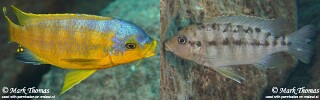
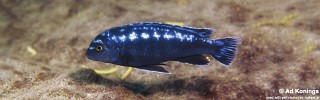
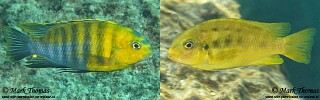
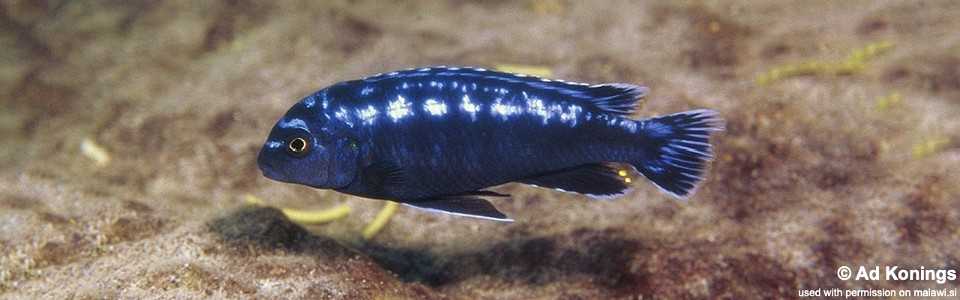




Photo gallery