Primarily sandy habitat; males require a small rock
adjacent to the spawning site and are therefore
often encountered in the intermediate habitat.
Geographic distribution:
Chizumulu Island; also recorded at Ntekete and
Gome on the eastern shore of Lake Malawi.
Breeding:
Males construct a sand-castle spawning structure
30–40 cm high piled alongside a small rock,
slanted at an angle of 30–40° to the horizontal.
The spawning dish is situated close to the rock.
Special notes:
The name “jakuta” means “replete” in Chi-Cheŵa.
Females and non-breeding males frequently have
stomachs filled with debris and plankton collected
just above the sand. The flank pattern differs from
Otopharynx auromarginatus by a large elongate
blotch accompanied by two or three smaller spots.
A form referred to as O. sp. ‘tetraspilus elongate spot’
may represent the same taxon.
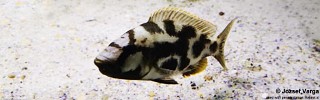
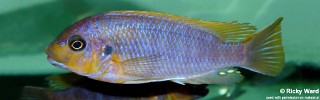
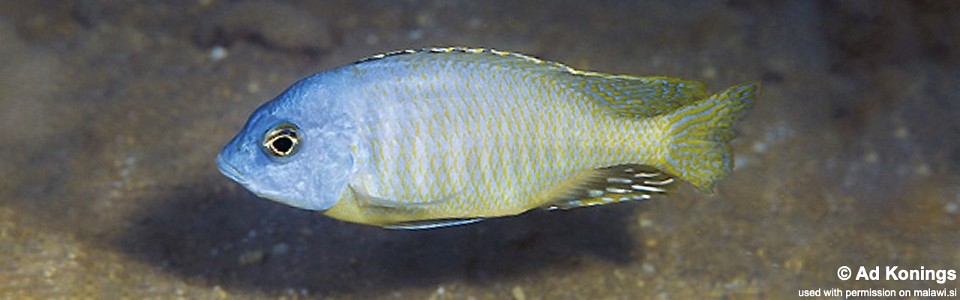




Photo gallery