Tropheops sp. 'masimbwe' Harbour Island Tropheops novemfasciatus 'Harbour Island'
Genus:
Tropheops
Biotope:
Shallow, sheltered bays in the south-eastern arm, typically in the
upper four meters. Most abundant in sediment-rich intermediate habitats with
small to medium rocks in vegetated areas, usually in or near beds of
Vallisneria.
Geographic distribution:
Endemic to Lake Malawi and restricted to the south-eastern arm; recorded
between Mvunguti and Nkopola on the western side and from Kadango to Chemwezi
Rocks on the eastern side.
Sexual dimorphism:
Females are smaller and less colourful than males, with shorter fins and
smaller anal ocelli. Longitudinal rows of dots on the flanks are visible in
females, juveniles, and submissive males, but not in dominant males.
Recommended aquarium size:
An aquarium volume of around 300 L or more is recommended.
Aquarium setup:
Provide sufficient shelter using rocks, flat stones, bricks, or similar
structures, arranged over large sandy patches.
Diet:
Collects epiphytic growth from the surfaces of macrophytes and also feeds
from the aufwuchs mat on rocks. In the aquarium it readily accepts a wide
range of foods, but the diet should include a high proportion of vegetable
matter to reduce the risk of over-growth and obesity.
Breeding:
Maternal mouth-brooder. Males excavate a pit beneath a stone by removing
sand, then court females with displaying and quivering and lead them to the
spawning pit. Other fish are chased away during the spawning phase.
Aggression:
Territorial males defend areas that are usually less than 1 m in
diameter; saucer-shaped sand-scrape nests are often present within
territories. Females and juveniles commonly occur in groups of 3–15
individuals.
Special notes:
This species was previously confused with Tropheops novemfasciatus, but the true
Pseudotropheus novemfasciatus represents a different species.
The population restricted to the south-eastern arm of Lake Malawi is now
referred to by Ad Konings as Tropheops sp. ‘masimbwe’. The
provisional name “masimbwe” (local vernacular for Vallisneria)
reflects its frequent occurrence in or near beds of Vallisneria.
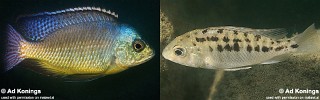
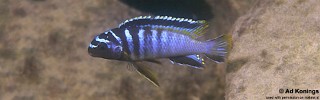
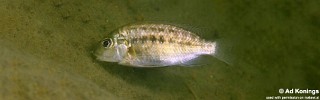
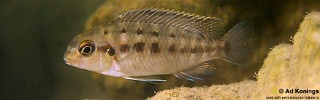
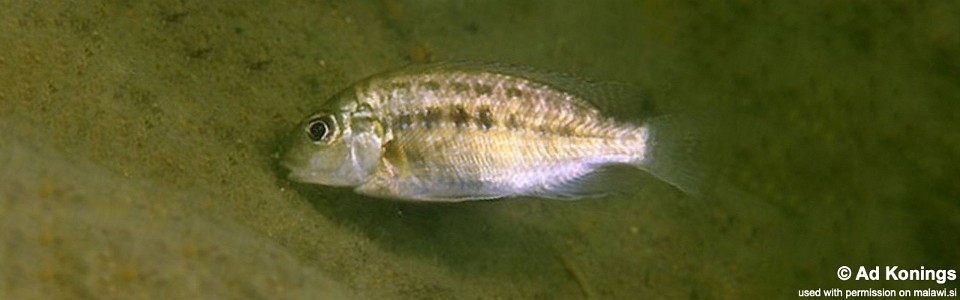




Photo gallery