Sediment-rich intermediate habitat with sandy areas
between rocks; often associated with sand-scooping behavior.
Geographic distribution:
Likoma Island, Lake Malawi; populations occur all
around Likoma Island and are absent from nearby
Chizumulu Island.
Typical adult size:
Medium-sized mbuna (exact maximum size not specified in
available observations).
Sexual dimorphism:
Males are blue; vertical barring may be prominent in
some individuals while absent in others within the same
population. Females are less intensely colored.
Diet:
Feeds by scooping sand and grazing from the substrate,
extracting edible material from the biocover and
associated debris.
Breeding:
Maternal mouthbrooder.
Aggression:
Not specifically documented; likely territorial as
typical for mbuna.
Special notes:
Previously confused with forms referred to as “zebra
bevous”. The Likoma population was earlier termed
Metriaclima sp. ‘black dorsal cobalt’. It is now
suggested to refer to this blue, sand-scooping mbuna
from Likoma as Pseudotropheus sp. ‘sand cobalt’.
Color pattern is variable within the population, with
some individuals lacking the vertical bars that are
prominent in others.
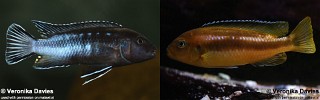
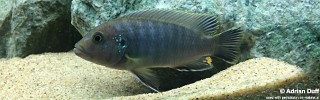
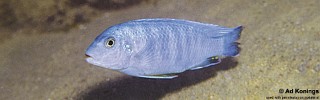
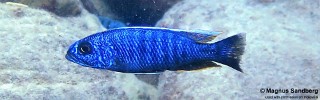
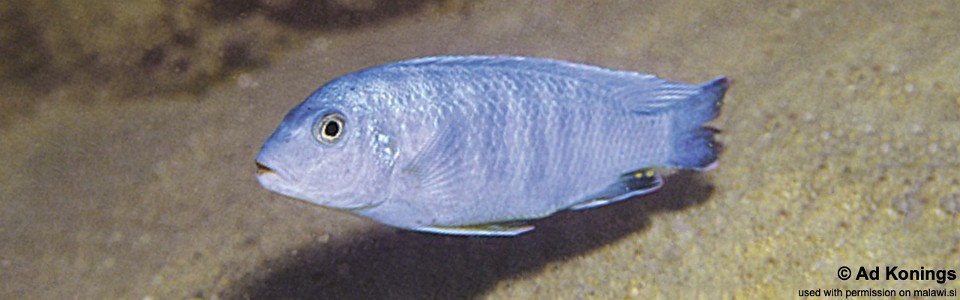




Photo gallery