Very shallow rocky habitat, usually not found deeper
than about seven meters.
Geographic distribution:
Occurs along the Mozambique shore between
Nkhungu Point and the Chiloelo River.
Typical adult size:
Males attain about 8 cm total length in the wild;
females remain approximately one fifth smaller.
Sexual dimorphism:
Breeding males are solid blue without white stripes.
Females and juveniles display the basic horizontal
stripe pattern with thin yellow abdominal stripes
and a relatively broad submarginal dorsal band.
Diet:
Primarily feeds from the aufwuchs, picking algal
tufts and associated small organisms from rocks.
Breeding:
Males in breeding coloration are usually not strongly
territorial but may defend a temporary spawning site
when ready to spawn. Females are maternal mouthbrooders
and typically hide among rocks while brooding.
Special notes:
Distinguished from closely related species such as
M. auratus, M. dialeptos, and
M. mossambiquensis by male coloration and
proportional differences in head and body depth.

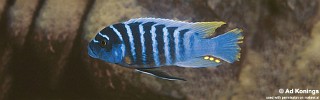
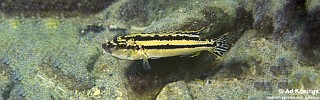
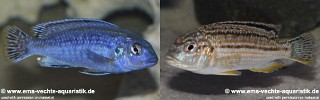

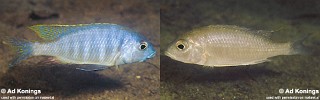
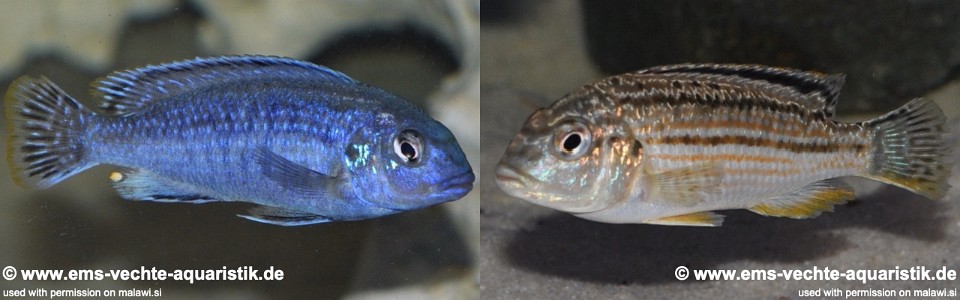



Photo gallery