Intermediate and sandy substrates at depths below 10 m.
Geographic distribution:
Eastern coast of Tanzania between Makonde and Lupingu and probably widely distributed around the Livingstone Mountains;
also reported from Kasinda on the opposite shore in Malawi.
Typical adult size:
Reaches about 15 cm TL in the wild, rarely more.
In aquarium males may attain at least 20 cm TL with age.
Sexual dimorphism:
Males develop an intense ultramarine blue coloration and, with age, a conspicuous glittering pattern that can obscure the melanin markings.
They grow larger and have longer fins.
Females remain grayish with broad dark bars, though older females may also become blue in aquarium conditions.
Recommended aquarium size:
A minimum aquarium volume of 500 l is recommended for a group of at least five to six individuals.
In mixed aquaria with large sand-sifting hosts, a tank volume of 800–1000 l is required.
Aquarium setup:
Large sandy areas with only a few stones.
Diet:
Forages over sandy substrates for food particles and takes advantage of material stirred up by large sand-sifting cichlids.
In aquarium it accepts small portions of frozen foods such as Artemia and Cyclops together with dried foods.
Breeding:
Maternal mouthbrooder.
In aquarium the male selects a spawning site near a rock, courts the female and defends the territory during spawning.
Eggs are taken into the female’s mouth and fertilized internally.
Incubation lasts about three weeks, and the fry are released within about one week thereafter.
Aggression:
Intraspecific aggression is common but usually results in little physical damage.
May harass smaller species, though severe injury is rare.
Special notes:
Member of the Placidochromis electra species group of “blue followers”.
Adult males develop a distinctive glittering dress with age, which may also appear faintly in females.
The form differs from Placidochromis phenochilus by lacking white lips and from P. sp. ‘phenochilus gissel’ by its deeper blue coloration and development of glitter.
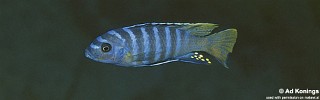
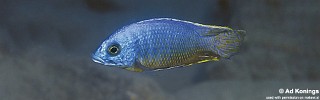
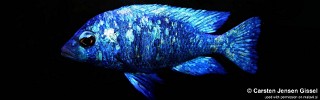
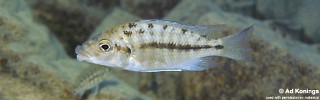
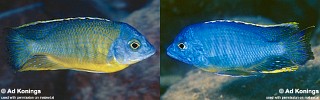
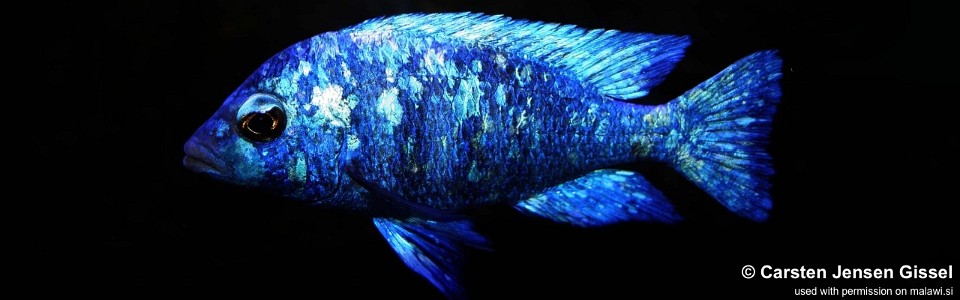




Photo gallery