Intermediate and rocky habitat. Occurs in sediment-rich shoreline stretches, and is
most common in deeper water at 5–10 m, although it may also be encountered in shallow
intermediate habitat close to the surface.
Geographic distribution:
Found at Chizumulu Island (Malawi), and also recorded between Mbweca (Mozambique)
and Undu Point (Tanzania).
Typical adult size:
Adult males reach about 15–16 cm total length, while females typically remain smaller
at about 12–13 cm.
Sexual dimorphism:
Females are light brown to silver-yellow (yellow-brown) and show interrupted black
horizontal striping with a faint pattern of vertical bars; two horizontal rows of spots
may be visible on the body.
Males are larger and much more colourful, with blue and yellow patterning; in many
populations the body is blue with a variable yellow ventral region, while at some
localities (Cobwé and Lumbaulo) males can be entirely yellow. Some populations show
irregular blue-and-yellow patterning across the body.
Recommended aquarium size:
600 L (a minimum tank length of about 200 cm is advised).
Aquarium setup:
Provide a large tank (around 200 cm minimum length) with extensive rockwork to
replicate a rocky setting, including caves and sheltered retreats. Caves should allow
the female(s) to withdraw but be too small for the male to enter.
Diet:
Herbivorous aufwuchs grazer, primarily harvesting diatoms and other small algae from
the algal matrix on rocks. It feeds by pressing the mouth to the substrate and raking
through the aufwuchs with multi-row, three-pronged teeth, removing sediment and loose
material along with the algal layer.
Breeding:
Males defend relatively large territories (about 4 m in diameter) centred on a
spawning site, typically a small cave among rocks or beneath an overhanging boulder.
Spawning occurs in the male’s cave; females may visit several males to have broods
fertilised. Females are maternal mouthbrooders and remain solitary while incubating,
hiding among rocks in shallow intermediate habitat.
Incubation lasts about three weeks; fry are released and then abandoned, and begin
feeding on algae soon after release.
Aggression:
Males are strongly territorial and can be highly aggressive within the species and
towards similar-looking species, especially those resembling the male breeding
coloration. Keeping more than one male together is strongly discouraged; a single male
with several females is recommended, with ample shelter for females.
Special notes:
This species was previously referred to as P. sp. ‘yellow ventral’ and is part of
the informal P. nigra group associated with somewhat deeper, sediment-richer rocky
habitats.
Along the shoreline between Mbweca (Mozambique) and Undu Point (Tanzania), steep rocky
habitats are limited; only at Lumbaulo (and possibly Liutche) is the rocky habitat
described as sediment-free, yet P. flaviventris and P. genalutea occur there.
Male colour patterns vary geographically: some populations show irregular blue-and-yellow
patterning across the body (e.g., Hai Reef, Undu Point, Ntumba), many populations have a
blue body with a variable yellow ventral region, and at Cobwé and Lumbaulo males may be
entirely yellow. Females show the rows-of-spots and subdued bars typical of the nigra
group.
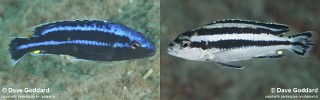
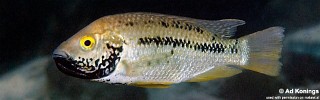
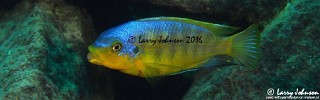
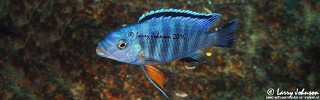
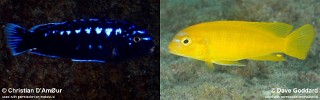
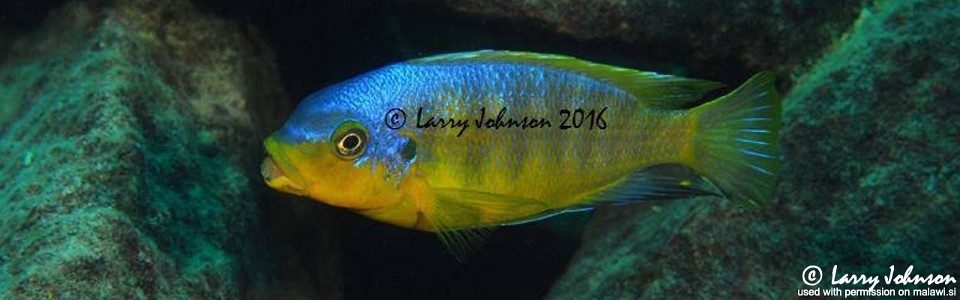




Males are larger and much more colourful, with blue and yellow patterning; in many populations the body is blue with a variable yellow ventral region, while at some localities (Cobwé and Lumbaulo) males can be entirely yellow. Some populations show irregular blue-and-yellow patterning across the body.
Incubation lasts about three weeks; fry are released and then abandoned, and begin feeding on algae soon after release.
Along the shoreline between Mbweca (Mozambique) and Undu Point (Tanzania), steep rocky habitats are limited; only at Lumbaulo (and possibly Liutche) is the rocky habitat described as sediment-free, yet P. flaviventris and P. genalutea occur there.
Male colour patterns vary geographically: some populations show irregular blue-and-yellow patterning across the body (e.g., Hai Reef, Undu Point, Ntumba), many populations have a blue body with a variable yellow ventral region, and at Cobwé and Lumbaulo males may be entirely yellow. Females show the rows-of-spots and subdued bars typical of the nigra group.
Photo gallery