Primarily a sediment-rich intermediate zone characterized by large, overhanging boulders.
Habitats are reported from about 15–25 m depth, and adult fish are occasionally observed in a
sand zone around 30 m.
Geographic distribution:
Reported from the southern part of Lake Malawi, including Mbenji Island and the reefs of
Chimwalani and Mazinzi.
Typical adult size:
Males are reported at about 19 cm TL and females at about 17 cm TL.
Sexual dimorphism:
Breeding males are very dark, described as dark blue/black, and can appear overall black.
Females are more silvery, with pale orange highlights on the scales, three distinct lateral spots, and
small dark markings along the base of the dorsal fin.
Recommended aquarium size:
A minimum aquarium volume of 500 l with a minimum tank length of 160 cm is recommended.
Aquarium setup:
A setup resembling a sediment-rich intermediate zone is recommended, with scattered large rocks
and boulders arranged to create overhangs and sheltered areas. Rock placement should break sight lines
so the aquarium is divided into multiple zones that are not fully visible to one another.
Diet:
A piscivore that also takes invertebrates. It is described as an ambush hunter that can remain
nearly motionless up to about 1 m above the substrate before striking downward with a rapid dart.
In the aquarium it accepts common foods and shows a preference for more protein-rich items.
Breeding:
Balz-active males are reported throughout the year. Territorial males defend breeding sites
associated with large rocks in the intermediate zone, including nests built under large boulders and
territories focused on the vertical face of a large boulder close to sandy bottom. Females that accept
a male enter the nest area to spawn. Mouthbrooding females move to shallower, tapering intermediate
habitats and seek shelter among scattered stones; an incubation period of about 3 weeks is reported
before fry are released.
Aggression:
Territorial males defend breeding areas decisively against conspecifics and other fishes, and
can confront substantially larger tankmates during territory defense.
Special notes:
This species has been traded under older names, including Stigmatochromis sp.
‘tolae’ and “Haplochromis tolae”, and it occurs sympatrically with Stigmatochromis woodi,
with which it is repeatedly confused. Juveniles and subadults may form schools in shallower parts of
the intermediate zone, while older fish become more solitary. It is also noted that larger individuals
may consume markedly smaller fishes, with warnings given for tankmates under 5 cm.
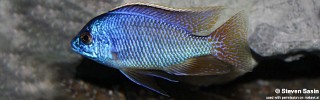
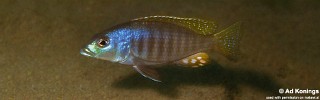
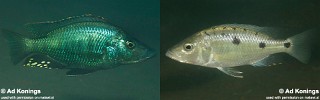
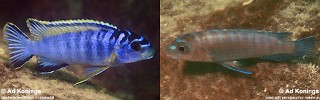
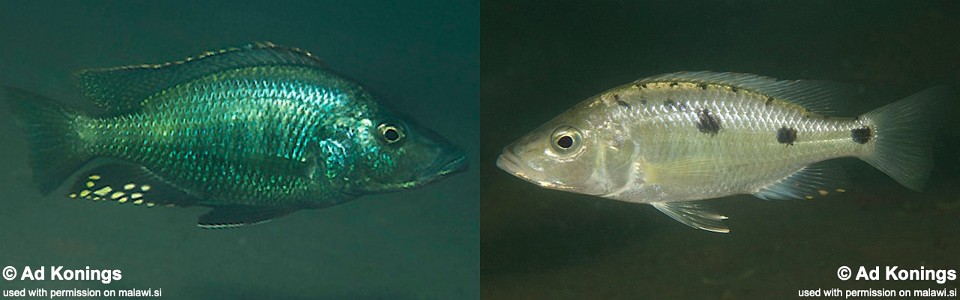




Photo gallery