Stony to rocky substrates with large rocks that are largely free of sediment; reported from
3–15 m depth.
Geographic distribution:
Northeastern Lake Malawi (Tanzanian coast), from Mbamba Bay to Higga Reef.
Typical adult size:
Up to about 15 cm total length in traded specimens.
Sexual dimorphism:
Dominant males are metallic blue with pronounced vertical bars. Females remain yellow to
whitish (sometimes grayish), are smaller, and have shorter fins with smaller anal ocelli.
Recommended aquarium size:
A tank volume of over 500 l is recommended. A minimum tank length of around 2 m is
recommended to maintain more than one active male.
Aquarium setup:
Provide plentiful shelters and structure using rocks and similar materials (e.g. flat
stones or bricks) to allow display space and territory separation.
Diet:
Feeds mainly on algal bio-cover (aufwuchs) from rocks. In captivity it accepts varied foods,
but a high proportion of vegetable matter is advised to reduce excessive weight gain.
Breeding:
Maternal mouthbrooder. Males excavate a pit beneath a stone by removing sand, court females
with display and quivering, and lead them to the pit to spawn. In captivity, incubation is
reported to last about 3 weeks, with fry released within the following
week depending on perceived safety.
Aggression:
Generally aggressive, particularly toward conspecifics; males are strongly territorial.
Despite its large size, it is described as not among the most aggressive members of the genus.
Special notes:
Described as a large, deep-bodied Tropheops with an angular forehead and thick build compared
with similarly shaped relatives. It is stated to be infrequently imported. Some authors have
treated it as the same taxon as T. sp. ‘chilumba’, while others consider them distinct based on
differences in female coloration and aspects of male patterning and shape; a southern “chilumba
type” population has been suggested to align closely with this form.

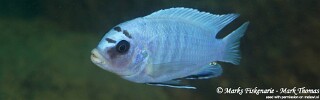
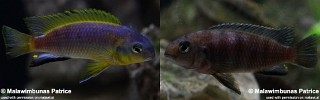
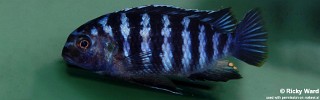




Photo gallery