Sandy sections of the intermediate habitat over gradually shelving bottoms.
Most observations are around 10 m depth and it is rarely found below 20 m.
Geographic distribution:
Apparently lake-wide, with records and observations from Chewere, Kande, Chizumulu Island and Likoma Island.
Also collected at Cape Maclear.
Typical adult size:
Maximum total length is about 23 cm.
Sexual dimorphism:
Breeding males are uniformly sky blue, obscuring the melanin pattern.
Females are silvery-white with two distinct longitudinal black lines.
Recommended aquarium size:
A tank length of at least 150 cm is recommended, and a length exceeding 200 cm is advised if more than one adult male is kept.
Aquarium setup:
Avoid tank mates with similar male breeding coloration to reduce aggression and the risk of hybridization.
Diet:
Paedophage that attacks mouthbrooding females from above, sometimes initiating strikes from several meters above the target.
Often seen among schools of mouthbrooding utaka and has been observed attacking mouthbrooding females of other sand-dwelling species.
Breeding:
Breeding strategy is poorly known.
Blue males have been observed hunting rather than displaying, and a blue male was once seen guarding a deep crater that may have functioned as a spawning site.
Aggression:
Adult males may become territorial in aquarium conditions, particularly in confined spaces.
Special notes:
Distinguished from most Protomelas by having only one inner tooth row.
A specialized paedophage that uses head-ramming attacks on mouthbrooding females, which may cause brood release followed by rapid consumption.
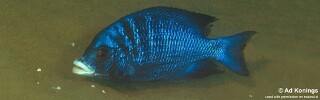
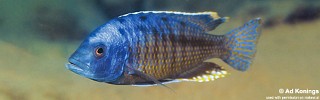
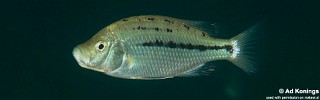
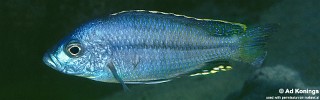
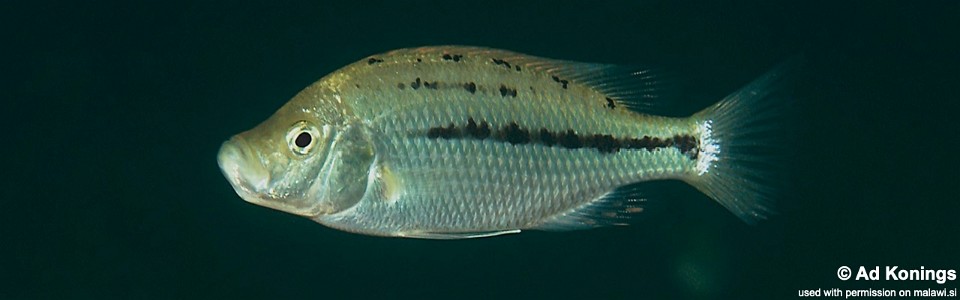




Photo gallery