Primarily a deep-water, benthic-associated species, reported as common in trawl
catches in the southern arms at about 34–114 m. It appears to be less typical
of truly pelagic water over the anoxic zone, but in the far south it has also been
taken in large schools at roughly 20–50 m.
Geographic distribution:
Collected from the southern end of Lake Malawi; later material suggests it may be
more widely distributed in suitable deep habitats and is often considered potentially
lake-wide.
Typical adult size:
Type specimens are about 145.5–150 mm SL; later material attributed to this
species includes adults up to about 180 mm SL, with most below about
160 mm SL.
Sexual dimorphism:
Outside breeding, both sexes are typically silvery and countershaded. Breeding males
are described as retaining silvery flanks but becoming dark dorsally and on the upper
snout, with dark pigmentation also extending to the lips and throat, unpaired fins,
and pelvic fins.
Diet:
Reported to feed heavily on the lake sardine Engraulicypris sardella, and
will take other fishes that fit in the mouth, including other Diplotaxodon.
Breeding:
Males in breeding coloration have been caught at different times of year. Because
breeding-coloured males were among deep-water net hauls, spawning has been inferred
to occur in the water column, with breeding activity reported at least several times
per year in the southern part of the lake.
Special notes:
Diplotaxodon argenteus is the type species of the genus and was the only
formally described Diplotaxodon until the 1970s. It has a strongly
upwardly angled mouth with robust jaws and a long premaxillary pedicel, yet it also
shows a relatively high lower gill-raker count (commonly cited around 23–25 in the
type material), which helps separate it from some superficially similar congeners and
may indicate capture of relatively small prey in addition to fish. Some deep-water
“forms” reported in the literature as Diplotaxodon sp. ‘deep’, sp. ‘large
black’, and sp. ‘black argenteus’ have been considered very similar in overall shape
and may represent the same species.

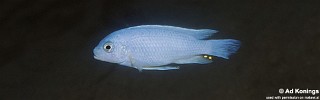
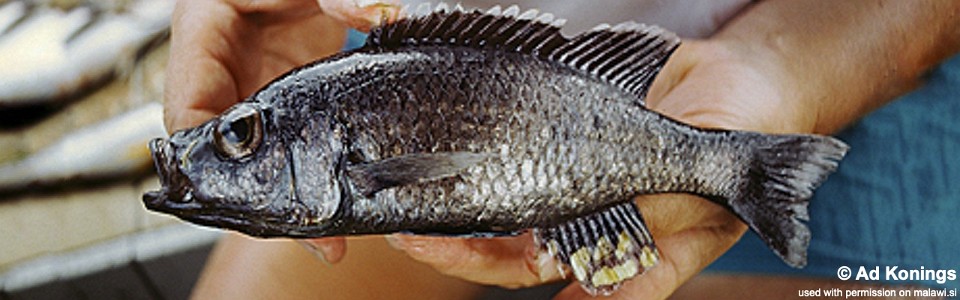



Photo gallery