Sandy-bottom areas, typically at 15–35 m depth and reported as most common around
15–18 m; also described from a sand zone bordering the transition zone, with breeding arenas
associated with stones in the shallower, sand-running transition zone. Some habitats include small
patches of aquatic plants such as Vallisneria.
Geographic distribution:
Widespread around Lake Malawi in suitable habitats.
Typical adult size:
Up to 170 mm standard length, with reported maximum total length of about 20–22 cm.
Sexual dimorphism:
Males are typically larger and more colourful than females and tend to have longer fins,
although these differences may be subtle in sexually inactive males.
Recommended aquarium size:
An aquarium volume of 800 L or more with a minimum tank length of 200 cm is
recommended.
Aquarium setup:
Use sandy substrate with only a few large, scattered stones to reflect a sand-running
transition zone; low, loose stands of Vallisneria may be used if they do not significantly reduce
open swimming space.
Diet:
A carnivorous pursuit hunter that targets small fishes; fish remains have been documented in
examined stomach contents, and invertebrates are also indicated as possible prey. Pack-hunting has
been reported, with groups that may include over one hundred individuals, sometimes alongside other
species.
Breeding:
Males develop blue breeding colours with yellowish fins and excavate a very shallow dip in
sand, usually near a rock and sometimes beneath one. Mouthbrooding females remain over sand and
may be encountered in small groups.
Aggression:
Generally described as not very aggressive and relatively non-territorial in aquaria, though
males defend spawning sites during the breeding period. Small tankmates that fit in the mouth may
be consumed.
Special notes:
Diagnosed by a thick, dark longitudinal band along the flank that continues into an
interocular bar; upper-jaw teeth are simple and closely spaced. It is not
commonly imported, and males may take a long time to colour; in aquaria they often retain the
juvenile/female longitudinal band for extended periods.

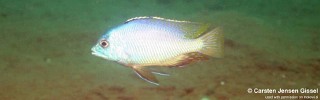
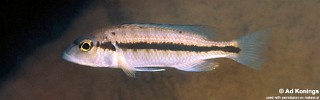
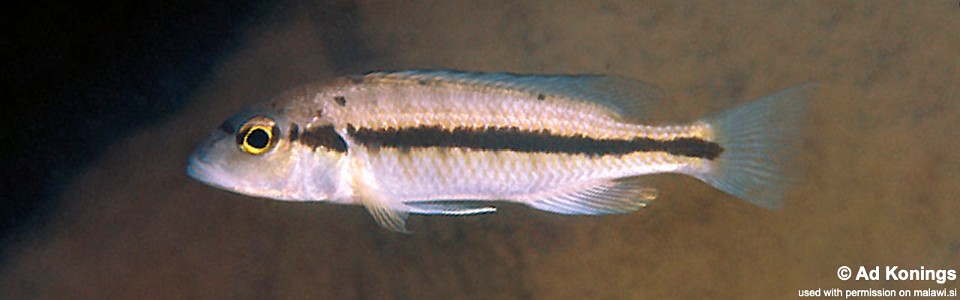




Photo gallery