Southwest Arm or Fort Johnson, Monkey Bay, Lake Malawi.
Biotope:
Shallow sandy to muddy bays with sediment-covered sand, typically bordered by reed stands, with
scattered rock slabs or larger stones and patches of aquatic vegetation such as Vallisneria and
Ceratophyllum demersum.
Geographic distribution:
Lake-wide distribution throughout Lake Malawi; export specimens are mainly sourced from Senga Bay.
Typical adult size:
Up to about 14 cm total length.
Recommended aquarium size:
A minimum aquarium volume of 400 L with a minimum tank length of 140 cm is recommended.
Aquarium setup:
Provide a broad open sand zone with only a few larger rocks or boulders, and include plants where
feasible; leave extensive open sand areas for continuous foraging.
Diet:
Forages in sand and mud for insect larvae and other soft invertebrates, including small crustaceans;
takes mouthfuls of sediment, filters edible items, and expels the remaining sand through the gills.
Breeding:
Males excavate and defend small pits in mud or sand, usually near reed stands; females are courted
into the pit where spawning occurs. This species is a mouthbrooder.
Aggression:
Generally very peaceful; territoriality is centered on the male’s pit, and conflicts are typically
limited to brief threat displays, with other males being chased from the immediate area during breeding.
Special notes:
Tramitichromis is defined by an unusual lower pharyngeal bone with long, slender teeth—especially
elongated anterior teeth with backward-bent tips—and a downward-projecting anterior blade. Within the
genus, T. intermedius is associated with shallow vegetated areas rather than the typical sandy habitat.
The placement of this species in Tramitichromis has been questioned, as its flank pattern of three spots
and its very large sensory pores on the lower jaw have been noted as closer to Trematocranus; it was
previously treated as Lethrinops intermedia. It is commonly encountered singly or in small groups.
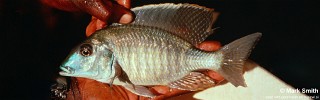
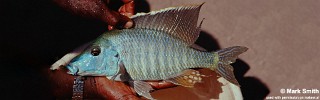
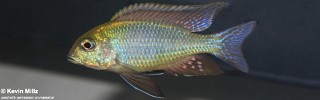
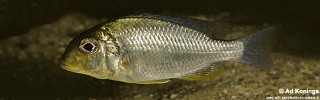




Photo gallery