Sandy habitats at depths of 7–25 m in areas not strongly
exposed to wave action. Frequently associated with rubble and small
stones scattered over sand.
Geographic distribution:
Lake Malawi. Reported from various localities along the
western coast of Malawi, most frequently in the southern part of the
lake, including Domwe Island, Namalenje Island, Otter Island,
Thumbi West Island, and Zambo Point.
Typical adult size:
Up to 15 cm total length.
Recommended aquarium size:
A minimum tank length of 120 cm and a volume of
350 l are recommended.
Aquarium setup:
An aquarium with extensive sandy areas and some scattered
rubble or small stones is appropriate. Spawning sites may be
constructed either as sand bowers on open substrate or on rocks that
are largely covered with sand.
Diet:
Feeds on silt layers covering the sand and also on
plankton. The intestine is long and coiled, exceeding three times the
standard length. Benthic algae, including the macrophyte
Vallisneria aethiopica, are reported as part of the diet.
Breeding:
Breeding males develop intense coloration with a deep blue
head and dorsal body, and black anal and pelvic fins. Males defend
sand bowers at depths of about 15 m, spaced roughly 2 m apart.
Spawning sites have also been observed on rocks almost entirely
covered by sand.
Aggression:
Territorial males defend their spawning sites during the
breeding period.
Special notes:
Usually lacks a distinct body pattern when alive, although
preserved specimens may show a faint mid-lateral stripe. Distinguished
by a long coiled intestine, relatively low numbers of gill rakers,
less crowded pharyngeal teeth, and a lower pharyngeal bone with the
anterior blade directed downward. Populations occurring over shallow
sandy areas are vulnerable to capture by beach seining.
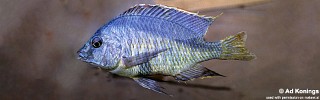
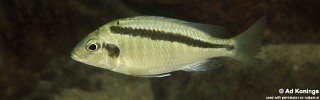
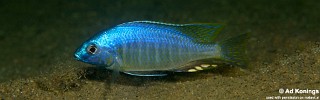
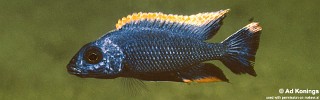
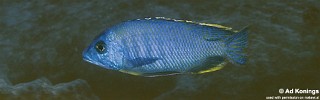
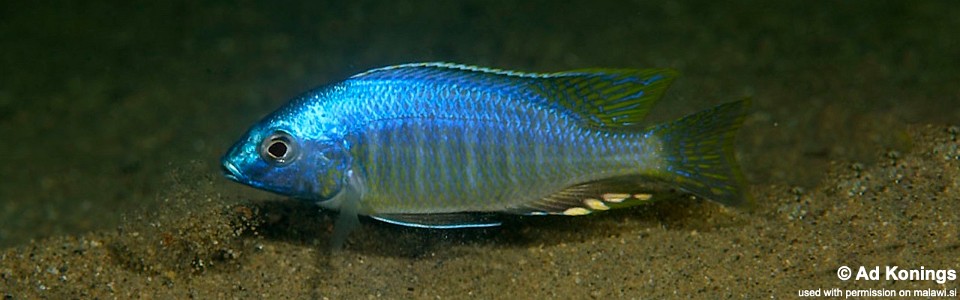




Photo gallery