Sediment-free rocky habitats with preference for medium-sized rocks.
Occurs from extreme shallows down to 35 m depth, with males most common
between 6–10 m and females mainly in the upper 2 m.
Geographic distribution:
Restricted to the southwestern arm of Lake Malawi around the
Nankumba Peninsula, including Thumbi West Island and Domwe Island.
Typical adult size:
Up to about 15 cm total length (122 mm SL recorded);
considered a relatively small member of the genus.
Sexual dimorphism:
Males approximately 20% larger than females, more colorful, with
broader fins and larger egg-spots on the anal fin. Males dark blue with
prominent black vertical barring and broad black submarginal bands in the fins.
Females and juveniles grey with longitudinal series of blotches along the flanks.
Recommended aquarium size:
Minimum 500 l; 800 l preferable for long-term maintenance.
Aquarium setup:
Large rocky aquarium with ample swimming space. Avoid keeping with
other similar-sized Petrotilapia species.
Diet:
Feeds predominantly on epilithic algae and benthic invertebrates
within the algal mat. Females and juveniles also consume plankton when abundant.
In captivity, algae-based foods are appropriate.
Breeding:
Maternal mouthbrooder. Males defend territories against conspecific
males only. Females incubate eggs and
larvae in the mouth for approximately three weeks.
Aggression:
Territorial males defend relatively large areas but are reported
to be less aggressive than comparable Tanganyikan Petrochromis.
Special notes:
Member of the P. nigra group characterized in females by
longitudinal rows of blotches on a grey background.
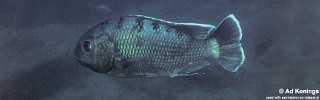
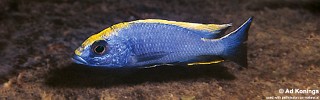
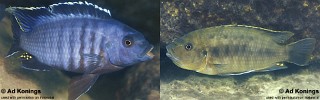
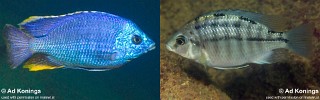
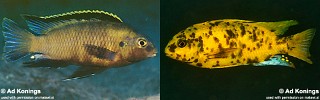
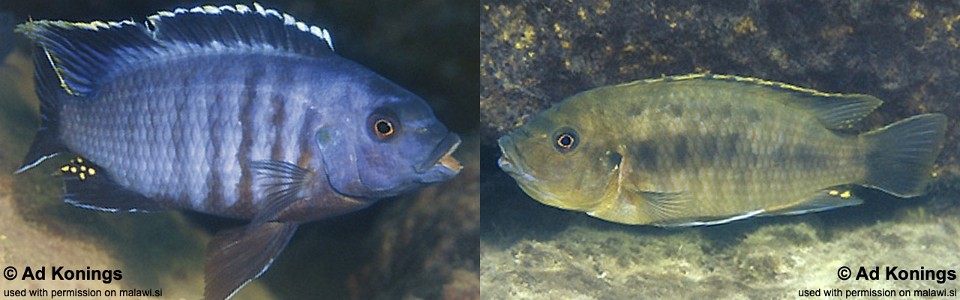




Photo gallery