Malawi cichlids are among the most colourful cichlids in the world. This is probably the main reason why they are so
popular with aquarists. Beginners, however, often do not realise that these are mostly aggressive cichlids
(especially the most popular group—mbuna—includes many of the more aggressive Malawi species). This makes it even more
important to choose suitable species for a Malawi aquarium and to design the aquarium properly, so we can enjoy these
beautiful cichlids in the long run.
In the following article, we will try to explain what you should pay attention to when setting up a Lake Malawi
aquarium. At the end of the article, we also provide several examples of properly designed and stocked Malawi aquariums
that represent different habitat zones of this wonderful lake.
Substrate
Substrate (sand) is the first thing to pay attention to when setting up a Malawi aquarium. The sand grains must not
have sharp edges, because these cichlids constantly dig and move sand. Some species also pick up sand, sift it through
their mouths while searching for food, and sharp grains can injure them. Grain size is very important: ideally about
0.5 to 2 mm. The sand layer should be at least 5 cm deep (or more).
Choose natural colours. Sand that is too bright or too dark can also negatively affect the fish.
Another important point is to choose sand that does not alter water parameters. This mainly refers to substrates
intended for planted aquariums, which often lower pH—undesirable for Malawi cichlids, which live in alkaline water
with a higher pH. Smooth limestone-based sands are often the best choice, but various quartz sands can also work well.
Quartz sand can often be purchased cheaply in building supply stores; it simply needs to be washed thoroughly.
In our area, Kema Fuga Sand is very commonly used in Malawi aquariums. Make sure to choose a grain size of 1–2 mm,
labelled Kema Fuga Sand 200, because other grain sizes (smaller or larger) are also sold and are not suitable for
Malawi aquariums.
And if you were hoping to “shape” the sand exactly the way you want—forget it. Malawi cichlids will quickly dig it up
and rearrange it to suit their needs.
Aquarium decoration is always a matter of taste. But in Malawi aquariums the general rule is: if you do not like rocks,
forget about a Malawi aquarium. Especially for mbuna—also known as “rock fish”—a large number of rocks is highly
desirable. In nature, mbuna mainly inhabit rocky areas, so it is essential to provide enough rocks in the aquarium.
Use as many rocks as possible: they primarily serve as hiding places from more aggressive tank mates, the fish also
“graze” and feed on algae growing on the rocks, and rocks play an important role in breeding.
In aquariums with Haplochromines and Peacocks (Aulonocara), which mostly come from intermediate and sandy habitats,
fewer rocks can be used. Still, some rocks are recommended because they provide shelter for weaker individuals and are
also important for breeding, as most of these cichlids spawn near rocks.
In a non-mbuna aquarium (with Haplochromines and Aulonocara) it is usually enough to place individual rocks on the
bottom. With mbuna, however, rocks are preferably stacked high toward the back. Because building high rock piles with
natural stones can be difficult and risky (collapse), artificial backgrounds are often used in Malawi aquariums
(styrofoam or other materials shaped to resemble rock). You can make such a background yourself or order a custom one.
Among the higher-quality options are Back to Nature backgrounds; personally,
I also have very good experience with the more affordable Aquadecor backgrounds.
The main advantage of artificial rock modules is weight. A disadvantage (at least for some products) is that various
3D backgrounds and modules can occupy a significant volume of water inside the aquarium, which is not ideal.
Some companies now offer hollow 3D modules and backgrounds that take up much less volume, and their interior can also
provide excellent hiding places for cichlids.
Which natural rocks are suitable for a Malawi aquarium? In principle, almost any rock can be used—limestone rocks are
fine and even desirable, because in a Malawi aquarium we want a slightly higher pH. The main thing to watch out for is
sharp edges. Malawi cichlids (especially mbuna) chase each other constantly, and sharp rocks can lead to injuries.
Stack rocks to create as many hiding places and passages as possible. Openings and passages should not be smaller than
the largest fish in the aquarium, as fish can get stuck (this is also why so-called “holey” rocks are not always the
best choice). When stacking rocks, ensure they cannot topple if fish dig under them (which they often do), as this can
crack the aquarium glass. For safety, it is highly recommended to place a sheet of plexiglass or a PVC board
(e.g., Forex) on the bottom.
In the natural environment of Lake Malawi, plants are very rare. In the habitats from which most Malawi cichlids kept
in aquariums originate, plants are either absent or extremely scarce. Nevertheless, there are certain areas—mainly
sandy zones near river mouths—where plants are present. Some cichlid species live in such areas, but these species are
generally rarer in our aquariums; for them, plants provide either food or protection from other cichlids.
Therefore, if you really cannot live without plants, it is not a major “sin” to add some to a Malawi aquarium. Plants
can slightly help with water quality. On the other hand, if you want to accurately represent the natural environment,
then at the depths from which most of our cichlids come, plants are not present.
Even if you decide to use plants, you may face several challenges. The first is relatively low lighting, which is
recommended for Malawi aquariums, since many of these cichlids come from deeper water where light is weaker.
The second problem is that many Malawi cichlids are herbivorous and may quickly treat plants as food.
The third problem is planting itself: Malawi cichlids constantly dig and can uproot plants very quickly.
So, if you use plants, choose species that can grow in lower light and have tougher leaves (these are usually ignored
by Malawi cichlids). Protect planted areas with rocks to prevent uprooting. Plants that can be suitable for Malawi
aquariums include: Vallisneria gigantea, Vallisneria nana, Anubias barteri, Ceratophyllum demersum,
Microsorum pteropus, Cryptocoryne aponogetifolia...
The video below shows one Lake Malawi habitat where Vallisneria plants are present. The species Hemitiliapia
oxyrhynchus feeds on them—not by eating the plant itself, but by scraping algae from the Vallisneria leaves.
Lighting
Do not overdo the lighting in a Malawi aquarium. Most Malawi cichlids live at depths of 10 to 15 m and deeper, where
light is already weaker. It is therefore recommended to replicate that kind of lighting in the aquarium. The daylight
period in nature is long (about 10–14 hours), so it is desirable to keep the aquarium lights on for at least that long
(around 10 hours). This can lead to algae growth, which can be partially controlled by light intensity (which should
not be too strong anyway). If algae appear, do not necessarily see it as a problem: in Malawi aquariums—especially
mbuna aquariums—algae are actually desirable (particularly green algae). Mbuna in nature primarily feed on biofilm,
i.e. “aufwuchs”, by scraping algae from rocks.
Malawi cichlids generally “hate” very strong light, and it stresses them. Therefore, regardless of light strength,
it is good to create shaded areas in the aquarium where fish can retreat. If you do not have LED or another lighting
system that allows dimming, a simple trick is to use silver kitchen foil. Wrap foil around certain parts near the
lamps to reduce the amount of light. Another option is to wrap tubes with heat-resistant coloured foils; with the
right choice, this can also enhance Malawi cichlid colours.
These cichlids’ colours are beautifully enhanced with a combination of white and blue light—just keep intensity
moderate, as mentioned above.
Day and Night Simulation
As mentioned earlier, overly strong light can be stressful for Malawians, especially those from deeper waters.
In any case, sudden switching on and off is stressful for all fish. This is why so-called day/night simulations have
become very popular recently—meaning lights gradually turn on in the morning and gradually dim in the evening.
Water
A common belief about Lake Malawi and Malawi aquariums is that they require hard water. This (incorrect) claim appears
on many websites, but it is not true: Lake Malawi water is soft, but with a higher pH. Water parameters vary slightly
by location and especially with depth, but they generally fall within the following ranges:
Temperature: 23°C to 28°C
pH: 7.8 to 8.5
Total hardness (GH): 3°dGH to 5°dGH
Carbonate hardness (KH): 6°dKH to 8°dKH
Today, these parameters can be replicated very precisely using RO water and appropriate buffers and salts, but such
precision is not necessary. It is, however, important to remember that Malawi cichlids live in alkaline water and not
every water is suitable for them. Even so, if your water parameters are slightly outside the lake ranges, it is often
better to leave the water as it is and keep parameters stable, rather than trying to “optimise” water—especially if
you lack experience—and causing constant fluctuations. Fluctuations, especially changes in pH and hardness, can have
more serious consequences than stable parameters that are slightly off. Malawi cichlids are quite adaptable and can,
to some extent, adjust to harder water (especially captive-bred fish; for wild-caught fish, softer water is still
recommended). Based on decades of aquarist experience, there should not be major negative effects even if they live in
slightly harder water.
Acceptable water parameters for a Malawi aquarium are therefore roughly:
Temperature: 23°C to 28°C
pH: 7.6 to 8.7
Total hardness (GH): 3°dGH to 15°dGH
Carbonate hardness (KH): 6°dKH to 12°dKH
Many tap waters already fit these ranges. If your water is too soft in some areas, you can use various salts to raise
hardness. If pH is too low, you can use buffers to raise pH. Ideally, use products intended specifically for Malawi,
as they best reflect the lake’s natural conditions. You can read more about water in Lake Malawi—and how carbonate
hardness (KH) can be higher than total hardness (GH)—in the following article on our website:
“Lake Malawi Water”.
Filtration
Filtration is essential in Malawi aquariums. Malawi cichlids are “messy.” Malawi aquariums are also often slightly
overstocked to spread aggression, and compared to “regular” aquariums they usually have few or no plants to consume
excess nitrates and phosphates. Therefore, you need sufficient mechanical and biological filtration. Biological
filtration is especially important, so that the filter can convert fish-toxic ammonia (NH3) and nitrite (NO2) into less
toxic nitrate (NO3). In Malawi aquariums, ammonia can be particularly critical because it depends on pH. In acidic
water (e.g. pH = 6.0), ammonia (NH3) quickly converts into ammonium (NH4). In alkaline water at typical Malawi
aquarium pH (around 8.0), ammonia converts poorly or not at all into ammonium (NH4), and is therefore much more toxic.
So what is “sufficient” filtration? With Malawi cichlids, filtration is almost never “too much,” but pump capacity
should be at least 4× the aquarium volume per hour. For example: if the aquarium is 400 L, the pump should move at
least 1,600 L of water per hour, and there should be as much biological filter media as possible.
Regardless of how powerful your filter is, the aquarium needs time to mature biologically (cycle), about 3–4 weeks.
This is even more important in mbuna aquariums, because unlike “regular” aquariums where gradual stocking is often
recommended, with Malawi cichlids (especially aggressive mbuna) it is commonly recommended to add all fish (juveniles)
at once, so they grow up together—this reduces the likelihood of conflicts and aggression between species.
Filtration is the foundation of a healthy Malawi aquarium. But even the most powerful filter cannot replace regular
water changes. A filter cannot remove everything that accumulates in the aquarium, so regular water changes are
essential. The recommendation is 50% water each week. Why so much? In Malawi aquariums with few plants and higher
stocking, nitrates rise faster than in planted aquariums. If nitrates rise too high, they also become toxic to fish
(but elevated nitrates are not the only reason for water changes). Poor water quality is also a frequent cause of
stress and the trigger for various diseases.
Besides filtration itself, water flow is also very important in a Malawi aquarium. Malawi cichlids love flow, so the
use of a circulation pump is almost mandatory in such setups.
Air pumps are also welcome, as Malawi cichlids prefer water with high oxygen content. They are not strictly required,
because it can be enough to create good surface agitation by directing filter output or circulation pumps appropriately.
However, an air pump is strongly recommended in a fry aquarium, where strong flow cannot be created.
Choosing Suitable Species and Stocking a Malawi Aquarium
When choosing species for a Malawi aquarium, aquarium size is of course the most important factor. It should be
emphasised that volume alone is not as important as the aquarium’s footprint (length and width), since height is not
as crucial for these cichlids. Requirements vary by species (more on that below). In simple terms: the bigger the
aquarium, the better—because a larger aquarium gives you a wider choice of suitable fish. Not everyone can place a
two-metre aquarium (or longer) at home, but it is still necessary to meet at least the minimum requirements Malawi
cichlids need if you want the aquarium to function well long-term.
Size requirements differ between mbuna, Haplochromines, and peacocks (Aulonocara). Mbuna and Aulonocara usually grow
to a similar size (roughly 10–15 cm) and have similar minimum space requirements, while many Haplochromines grow
significantly larger and therefore require larger aquariums.
Of these three groups, mbuna—typically much more aggressive than Haplochromines and Aulonocara—also constantly chase
each other, so they need substantial swimming space and plenty of hiding places for weaker fish. During breeding,
males can become extremely aggressive. Because of this, the smallest recommended size for an mbuna aquarium is around
200 L; even more important than litres is length and width (height matters less than floor area). Length should be at
least 120 cm and width at least 40 cm. With this size you are limited mainly to less aggressive and smaller mbuna
species. The larger the aquarium, the more options you have and the more aggressive/larger species you can keep. For
example, in a 500 L mbuna aquarium you can keep the majority of mbuna species.
Aulonocara are much more peaceful than mbuna. Their size is similar, and even though they are calmer, they require a
similar aquarium size—because for Aulonocara you should provide as much sandy area as possible. A minimum aquarium for
Aulonocara would therefore also be about 200 L and 120 cm in length (though 300 L is recommended).
Haplochromines, however, often differ in size. Many species grow much larger than mbuna and Aulonocara—20 to 40 cm, or
even more. In terms of aggression and aquarium layout, they are similar to Aulonocara, but because of their size they
require at least 300 L and 130 cm in length. Even then, your choice of Haplochromines is limited, since many require
800 L or more.
How many fish should you stock in a Malawi aquarium? For “standard” aquariums, a common guideline is 1 litre per 1 cm
of fish. With Malawi cichlids (especially mbuna), slight overstocking is sometimes recommended to distribute aggression,
but it must not be exaggerated. For mbuna and Aulonocara that average around 10 cm, we can roughly say one mbuna or
Aulonocara per 10–15 litres of water. This does not apply to larger Haplochromines. When stocking, consider the actual
water volume, because in Malawi aquariums (especially mbuna setups) decoration (rocks) can displace a significant
number of litres.
Which species—and how many different ones? Most Malawi beginners want the most colourful aquarium possible, with many
different species. This is the most common mistake: it is almost always better to keep fewer species in larger groups
than many species in small groups (or worse, just pairs). Malawi cichlids live in harems, so one male needs several
females. When stocking a Malawi aquarium, keep the following in mind:
Mixing mbuna with other Malawi groups (Haplochromines and Aulonocara) is generally not recommended. Mbuna are much
more aggressive, live in a different habitat, and require different aquarium layout (lots of rocks). Most
Haplochromines and Aulonocara come from intermediate and sandy habitats and need fewer rocks and plenty of open
swimming space. Another reason not to mix is diet: most mbuna are herbivores, while Haplochromines and Aulonocara are
mainly carnivores. Mixing Haplochromines with Aulonocara is common, as they have similar aggression levels, similar
layout requirements, and similar diets. However, be cautious with predatory Haplochromines (fish-eaters): do not keep
them with smaller cichlids that could become prey. In certain cases, some mbuna can be combined with Haplochromines
and Aulonocara, but this requires careful selection of compatible species with similar requirements.
Remember the harem structure. For mbuna (more aggressive), it is recommended to stock at least 3–4 females per male.
For less aggressive species, one fewer female may be acceptable; for more aggressive species, keep more females
(5–6). For Haplochromines and Aulonocara (generally less aggressive than mbuna), many species do well with one male
and 2–3 females, though some species benefit from a higher female ratio.
Juveniles or adults? If you are setting up a new aquarium, stocking juveniles is recommended because fish that grow
up together tend to have fewer issues. The downside is that sexing juveniles is usually impossible at the sizes
commonly sold (with few exceptions), so achieving the correct male-to-female ratio can be a lottery. A good approach
is to start with a few extra juveniles and later rehome surplus fish—especially excess males. If Malawi cichlids grow
up together, it sometimes works even with a less-than-ideal ratio. The male/female ratio is “less” important for
less aggressive species, but for highly aggressive species an improper ratio can quickly lead to males killing each
other. Many species (except the most aggressive ones) can also be kept in larger groups (for example 3 males and
7 females).
If you add fish to an already stocked aquarium with adult cichlids, be careful. For mbuna, the main problem is
aggression; for Haplochromines, it is feeding behaviour. With mbuna, adding juveniles usually works, but they must
be large enough not to fit into adult mbuna mouths (around 3–4 cm). If you add adult mbuna, it is recommended to
rearrange the rockwork beforehand so territories are “reset” and fish re-establish dominance. With Haplochromines,
aggression is usually lower, but most are carnivorous and many are predators. Therefore, adding juveniles to an
aquarium with adult Haplochromines is usually not an option, because smaller fish would quickly become food.
With Haplochromines, adding adult fish is typically the only realistic approach.
Pay close attention to diet. Most mbuna are herbivores or limnivores, though some are omnivores and a few are
carnivores. Mixing these groups is not good, because you cannot control exactly what each fish eats. Herbivorous
mbuna need food with a high spirulina content, while high-protein foods are not suitable for them and are one of the
reasons behind the most well-known Malawi disease—Malawi bloat. Strongly herbivorous mbuna such as Labeotropheus
trewavasae or Chindongo demasoni have a very long digestive tract, making high-protein foods harder to digest, which
increases the risk of the disease.
In contrast to mbuna, the vast majority of Haplochromines and Aulonocara are carnivores, and many Haplochromines are
predators that feed on smaller fish. Especially with predators, carefully choose tank mates: select species that grow
large enough not to become prey.
And finally—almost the most important point: never stock together cichlids where there is a high likelihood of
hybridisation. Hybridisation between different species causes the loss of the original genetic identity. While it is
impossible to guarantee 100% prevention in every case, we can reduce the probability to a minimum. Keep in mind:
Do not keep together species from the same genus that look very similar. And never keep the same species from
different geographic localities together. Be especially cautious with females, as they are often very similar in
appearance even when males are distinct.
It is always better to keep more fish of the same species than many species with too few females. If a male has
enough females of his own species available, the chance of hybridisation is much lower.
In this article, we have covered what to pay attention to when setting up a Malawi aquarium and what to watch out for
when choosing species. To conclude, we present several good examples of properly designed and stocked Malawi aquariums,
so you may also get additional ideas for your own setup.
Aquarium Examples
Example 1
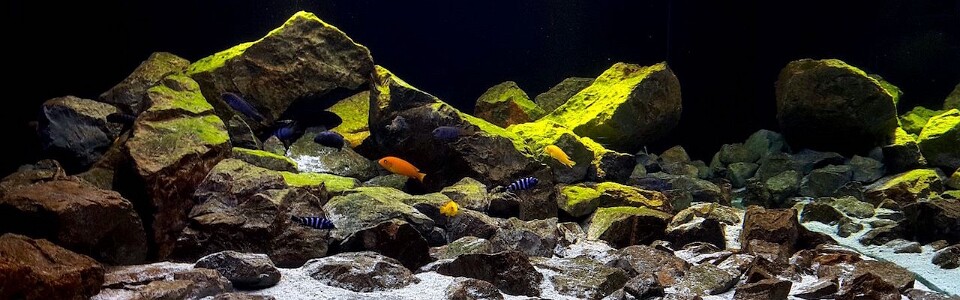
A Malawi mbuna aquarium representing the rocky habitat of Lake Malawi. Aquarium volume: 648 L; dimensions: 180×60×60 cm.
The following herbivorous/limnivorous mbuna are stocked:
Maylandia sp. “zebra gold” Kawanga
Cynotilapia zebroides “Maison reef”
Labeotropheus trewavasae “Chilumba”
Pseudotropheus interruptus
Example 2
Another Malawi mbuna aquarium—again a rocky habitat representation. This aquarium has a volume of 1100 L.
The following species are stocked:
This aquarium was selected mainly as an example of a good layout. Unfortunately, the species selection is not ideal,
because strict herbivores (C. demasoni) are kept together with the more carnivorous mbuna L. caeruleus, alongside other
limnivorous mbuna. It would definitely be better to remove L. caeruleus from this aquarium and keep it with other
carnivorous/omnivorous cichlids.
Example 3
Another mbuna aquarium example. The setup is relatively simple, but what matters most for mbuna is that rocks are
present in large numbers. This is a 470 L aquarium stocked with more aggressive mbuna species:
Labeotropheus fuelleborni OB
Melanochromis chipokae
Metriaclima estherae “Minos Reef”
Metriaclima pyrsonotos “Nakantenga”
Pseudotropheus socolofi
Tropheus sp. “Chilumba”
Example 4
An example of a non-mbuna aquarium representing an intermediate Lake Malawi habitat, still quite rich in rocks.
Aquarium volume: 720 L; dimensions: 200×60×60 cm. The aquarium is stocked with the following carnivorous cichlids and
the catfish Synodontis njassae (not a cichlid):
Another example of an intermediate habitat representation. This aquarium includes both mbuna and non-mbuna.
Because in this case (as in the example above) the mbuna are carnivorous mbuna, such stocking is appropriate.
Aquarium volume: 660 L; dimensions: 220×50×60 cm. Stocked are the following carnivorous Malawi fishes:
Sciaenochromis sp. “nyassae”
Otopharynx tetraspilus
Protomelas taeniolatus
Astatotilapia calliptera
Labidochromis caeruleus
Labidochromis sp. “nkhali”
Placidochromis sp. “phenochilus tanzania”
Synodontis njassae
Example 6
Another nice intermediate-habitat example. This aquarium is mostly stocked with non-mbuna species, and among mbuna it
contains two Labidochromis species—these are among the few mbuna suitable for keeping with Haplochromines and
Aulonocara, because they share similar feeding habits and are much less aggressive than most other mbuna.
Example 7
A relatively simple 800 L aquarium with sand on the bottom and a few rocks placed on the sand. The layout is suitable,
because the aquarium is stocked with cichlids from sandy habitats. The following species are kept:
Ctenopharynx nitidus (male)
Aulonocara sp. “stuartgranti maleri” Chidunga
Protomelas virgatus “Namalenje”
Mylochromis mola “Gome”
Copadichromis sp. “quads” Mbenji
Aulonocara baenschi
Example 8
And finally, one more aquarium with Malawi predators. Aquarium volume: 1147 L; dimensions: 255×75×60 cm.
The following Malawi predators are stocked:





Photograph: designer © by Mert Aykuta
Malawi cichlids are among the most colourful cichlids in the world. This is probably the main reason why they are so popular with aquarists. Beginners, however, often do not realise that these are mostly aggressive cichlids (especially the most popular group—mbuna—includes many of the more aggressive Malawi species). This makes it even more important to choose suitable species for a Malawi aquarium and to design the aquarium properly, so we can enjoy these beautiful cichlids in the long run.
In the following article, we will try to explain what you should pay attention to when setting up a Lake Malawi aquarium. At the end of the article, we also provide several examples of properly designed and stocked Malawi aquariums that represent different habitat zones of this wonderful lake.
Substrate
Substrate (sand) is the first thing to pay attention to when setting up a Malawi aquarium. The sand grains must not have sharp edges, because these cichlids constantly dig and move sand. Some species also pick up sand, sift it through their mouths while searching for food, and sharp grains can injure them. Grain size is very important: ideally about 0.5 to 2 mm. The sand layer should be at least 5 cm deep (or more).
Choose natural colours. Sand that is too bright or too dark can also negatively affect the fish.
Another important point is to choose sand that does not alter water parameters. This mainly refers to substrates intended for planted aquariums, which often lower pH—undesirable for Malawi cichlids, which live in alkaline water with a higher pH. Smooth limestone-based sands are often the best choice, but various quartz sands can also work well. Quartz sand can often be purchased cheaply in building supply stores; it simply needs to be washed thoroughly. In our area, Kema Fuga Sand is very commonly used in Malawi aquariums. Make sure to choose a grain size of 1–2 mm, labelled Kema Fuga Sand 200, because other grain sizes (smaller or larger) are also sold and are not suitable for Malawi aquariums.
And if you were hoping to “shape” the sand exactly the way you want—forget it. Malawi cichlids will quickly dig it up and rearrange it to suit their needs.
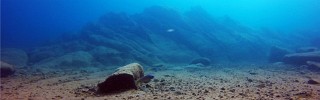
Right: example of sandy bottom at Mara Rocks; Photo: © by Marc Boulton
Decoration
Aquarium decoration is always a matter of taste. But in Malawi aquariums the general rule is: if you do not like rocks, forget about a Malawi aquarium. Especially for mbuna—also known as “rock fish”—a large number of rocks is highly desirable. In nature, mbuna mainly inhabit rocky areas, so it is essential to provide enough rocks in the aquarium. Use as many rocks as possible: they primarily serve as hiding places from more aggressive tank mates, the fish also “graze” and feed on algae growing on the rocks, and rocks play an important role in breeding.
In aquariums with Haplochromines and Peacocks (Aulonocara), which mostly come from intermediate and sandy habitats, fewer rocks can be used. Still, some rocks are recommended because they provide shelter for weaker individuals and are also important for breeding, as most of these cichlids spawn near rocks.
In a non-mbuna aquarium (with Haplochromines and Aulonocara) it is usually enough to place individual rocks on the bottom. With mbuna, however, rocks are preferably stacked high toward the back. Because building high rock piles with natural stones can be difficult and risky (collapse), artificial backgrounds are often used in Malawi aquariums (styrofoam or other materials shaped to resemble rock). You can make such a background yourself or order a custom one. Among the higher-quality options are Back to Nature backgrounds; personally, I also have very good experience with the more affordable Aquadecor backgrounds.
The main advantage of artificial rock modules is weight. A disadvantage (at least for some products) is that various 3D backgrounds and modules can occupy a significant volume of water inside the aquarium, which is not ideal. Some companies now offer hollow 3D modules and backgrounds that take up much less volume, and their interior can also provide excellent hiding places for cichlids.
Photo: © by Gregor Bauer
Which natural rocks are suitable for a Malawi aquarium? In principle, almost any rock can be used—limestone rocks are fine and even desirable, because in a Malawi aquarium we want a slightly higher pH. The main thing to watch out for is sharp edges. Malawi cichlids (especially mbuna) chase each other constantly, and sharp rocks can lead to injuries.
Stack rocks to create as many hiding places and passages as possible. Openings and passages should not be smaller than the largest fish in the aquarium, as fish can get stuck (this is also why so-called “holey” rocks are not always the best choice). When stacking rocks, ensure they cannot topple if fish dig under them (which they often do), as this can crack the aquarium glass. For safety, it is highly recommended to place a sheet of plexiglass or a PVC board (e.g., Forex) on the bottom.
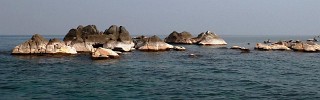
Top left: Masimbwe Island, top right: Mara Rocks; Photos: © by Marc Boulton
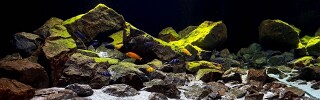
Bottom left: Ababi Island (Mbenji Islands), bottom right: Machili Island; Photos: © by Pete Barnes
Plants
In the natural environment of Lake Malawi, plants are very rare. In the habitats from which most Malawi cichlids kept in aquariums originate, plants are either absent or extremely scarce. Nevertheless, there are certain areas—mainly sandy zones near river mouths—where plants are present. Some cichlid species live in such areas, but these species are generally rarer in our aquariums; for them, plants provide either food or protection from other cichlids.
Therefore, if you really cannot live without plants, it is not a major “sin” to add some to a Malawi aquarium. Plants can slightly help with water quality. On the other hand, if you want to accurately represent the natural environment, then at the depths from which most of our cichlids come, plants are not present.
Even if you decide to use plants, you may face several challenges. The first is relatively low lighting, which is recommended for Malawi aquariums, since many of these cichlids come from deeper water where light is weaker. The second problem is that many Malawi cichlids are herbivorous and may quickly treat plants as food. The third problem is planting itself: Malawi cichlids constantly dig and can uproot plants very quickly.
So, if you use plants, choose species that can grow in lower light and have tougher leaves (these are usually ignored by Malawi cichlids). Protect planted areas with rocks to prevent uprooting. Plants that can be suitable for Malawi aquariums include: Vallisneria gigantea, Vallisneria nana, Anubias barteri, Ceratophyllum demersum, Microsorum pteropus, Cryptocoryne aponogetifolia...
The video below shows one Lake Malawi habitat where Vallisneria plants are present. The species Hemitiliapia oxyrhynchus feeds on them—not by eating the plant itself, but by scraping algae from the Vallisneria leaves.
Lighting
Do not overdo the lighting in a Malawi aquarium. Most Malawi cichlids live at depths of 10 to 15 m and deeper, where light is already weaker. It is therefore recommended to replicate that kind of lighting in the aquarium. The daylight period in nature is long (about 10–14 hours), so it is desirable to keep the aquarium lights on for at least that long (around 10 hours). This can lead to algae growth, which can be partially controlled by light intensity (which should not be too strong anyway). If algae appear, do not necessarily see it as a problem: in Malawi aquariums—especially mbuna aquariums—algae are actually desirable (particularly green algae). Mbuna in nature primarily feed on biofilm, i.e. “aufwuchs”, by scraping algae from rocks.
Malawi cichlids generally “hate” very strong light, and it stresses them. Therefore, regardless of light strength, it is good to create shaded areas in the aquarium where fish can retreat. If you do not have LED or another lighting system that allows dimming, a simple trick is to use silver kitchen foil. Wrap foil around certain parts near the lamps to reduce the amount of light. Another option is to wrap tubes with heat-resistant coloured foils; with the right choice, this can also enhance Malawi cichlid colours.
These cichlids’ colours are beautifully enhanced with a combination of white and blue light—just keep intensity moderate, as mentioned above.
Day and Night Simulation
As mentioned earlier, overly strong light can be stressful for Malawians, especially those from deeper waters. In any case, sudden switching on and off is stressful for all fish. This is why so-called day/night simulations have become very popular recently—meaning lights gradually turn on in the morning and gradually dim in the evening.
Water
A common belief about Lake Malawi and Malawi aquariums is that they require hard water. This (incorrect) claim appears on many websites, but it is not true: Lake Malawi water is soft, but with a higher pH. Water parameters vary slightly by location and especially with depth, but they generally fall within the following ranges:
Temperature: 23°C to 28°C
pH: 7.8 to 8.5
Total hardness (GH): 3°dGH to 5°dGH
Carbonate hardness (KH): 6°dKH to 8°dKH
Today, these parameters can be replicated very precisely using RO water and appropriate buffers and salts, but such precision is not necessary. It is, however, important to remember that Malawi cichlids live in alkaline water and not every water is suitable for them. Even so, if your water parameters are slightly outside the lake ranges, it is often better to leave the water as it is and keep parameters stable, rather than trying to “optimise” water—especially if you lack experience—and causing constant fluctuations. Fluctuations, especially changes in pH and hardness, can have more serious consequences than stable parameters that are slightly off. Malawi cichlids are quite adaptable and can, to some extent, adjust to harder water (especially captive-bred fish; for wild-caught fish, softer water is still recommended). Based on decades of aquarist experience, there should not be major negative effects even if they live in slightly harder water.
Acceptable water parameters for a Malawi aquarium are therefore roughly:
Temperature: 23°C to 28°C
pH: 7.6 to 8.7
Total hardness (GH): 3°dGH to 15°dGH
Carbonate hardness (KH): 6°dKH to 12°dKH
Many tap waters already fit these ranges. If your water is too soft in some areas, you can use various salts to raise hardness. If pH is too low, you can use buffers to raise pH. Ideally, use products intended specifically for Malawi, as they best reflect the lake’s natural conditions. You can read more about water in Lake Malawi—and how carbonate hardness (KH) can be higher than total hardness (GH)—in the following article on our website: “Lake Malawi Water”.
Filtration
Filtration is essential in Malawi aquariums. Malawi cichlids are “messy.” Malawi aquariums are also often slightly overstocked to spread aggression, and compared to “regular” aquariums they usually have few or no plants to consume excess nitrates and phosphates. Therefore, you need sufficient mechanical and biological filtration. Biological filtration is especially important, so that the filter can convert fish-toxic ammonia (NH3) and nitrite (NO2) into less toxic nitrate (NO3). In Malawi aquariums, ammonia can be particularly critical because it depends on pH. In acidic water (e.g. pH = 6.0), ammonia (NH3) quickly converts into ammonium (NH4). In alkaline water at typical Malawi aquarium pH (around 8.0), ammonia converts poorly or not at all into ammonium (NH4), and is therefore much more toxic.
So what is “sufficient” filtration? With Malawi cichlids, filtration is almost never “too much,” but pump capacity should be at least 4× the aquarium volume per hour. For example: if the aquarium is 400 L, the pump should move at least 1,600 L of water per hour, and there should be as much biological filter media as possible.
Regardless of how powerful your filter is, the aquarium needs time to mature biologically (cycle), about 3–4 weeks. This is even more important in mbuna aquariums, because unlike “regular” aquariums where gradual stocking is often recommended, with Malawi cichlids (especially aggressive mbuna) it is commonly recommended to add all fish (juveniles) at once, so they grow up together—this reduces the likelihood of conflicts and aggression between species.
Filtration is the foundation of a healthy Malawi aquarium. But even the most powerful filter cannot replace regular water changes. A filter cannot remove everything that accumulates in the aquarium, so regular water changes are essential. The recommendation is 50% water each week. Why so much? In Malawi aquariums with few plants and higher stocking, nitrates rise faster than in planted aquariums. If nitrates rise too high, they also become toxic to fish (but elevated nitrates are not the only reason for water changes). Poor water quality is also a frequent cause of stress and the trigger for various diseases.
Besides filtration itself, water flow is also very important in a Malawi aquarium. Malawi cichlids love flow, so the use of a circulation pump is almost mandatory in such setups.
Air pumps are also welcome, as Malawi cichlids prefer water with high oxygen content. They are not strictly required, because it can be enough to create good surface agitation by directing filter output or circulation pumps appropriately. However, an air pump is strongly recommended in a fry aquarium, where strong flow cannot be created.
Choosing Suitable Species and Stocking a Malawi Aquarium
When choosing species for a Malawi aquarium, aquarium size is of course the most important factor. It should be emphasised that volume alone is not as important as the aquarium’s footprint (length and width), since height is not as crucial for these cichlids. Requirements vary by species (more on that below). In simple terms: the bigger the aquarium, the better—because a larger aquarium gives you a wider choice of suitable fish. Not everyone can place a two-metre aquarium (or longer) at home, but it is still necessary to meet at least the minimum requirements Malawi cichlids need if you want the aquarium to function well long-term.
Size requirements differ between mbuna, Haplochromines, and peacocks (Aulonocara). Mbuna and Aulonocara usually grow to a similar size (roughly 10–15 cm) and have similar minimum space requirements, while many Haplochromines grow significantly larger and therefore require larger aquariums.
Of these three groups, mbuna—typically much more aggressive than Haplochromines and Aulonocara—also constantly chase each other, so they need substantial swimming space and plenty of hiding places for weaker fish. During breeding, males can become extremely aggressive. Because of this, the smallest recommended size for an mbuna aquarium is around 200 L; even more important than litres is length and width (height matters less than floor area). Length should be at least 120 cm and width at least 40 cm. With this size you are limited mainly to less aggressive and smaller mbuna species. The larger the aquarium, the more options you have and the more aggressive/larger species you can keep. For example, in a 500 L mbuna aquarium you can keep the majority of mbuna species.
Aulonocara are much more peaceful than mbuna. Their size is similar, and even though they are calmer, they require a similar aquarium size—because for Aulonocara you should provide as much sandy area as possible. A minimum aquarium for Aulonocara would therefore also be about 200 L and 120 cm in length (though 300 L is recommended).
Haplochromines, however, often differ in size. Many species grow much larger than mbuna and Aulonocara—20 to 40 cm, or even more. In terms of aggression and aquarium layout, they are similar to Aulonocara, but because of their size they require at least 300 L and 130 cm in length. Even then, your choice of Haplochromines is limited, since many require 800 L or more.
How many fish should you stock in a Malawi aquarium? For “standard” aquariums, a common guideline is 1 litre per 1 cm of fish. With Malawi cichlids (especially mbuna), slight overstocking is sometimes recommended to distribute aggression, but it must not be exaggerated. For mbuna and Aulonocara that average around 10 cm, we can roughly say one mbuna or Aulonocara per 10–15 litres of water. This does not apply to larger Haplochromines. When stocking, consider the actual water volume, because in Malawi aquariums (especially mbuna setups) decoration (rocks) can displace a significant number of litres.
Which species—and how many different ones? Most Malawi beginners want the most colourful aquarium possible, with many different species. This is the most common mistake: it is almost always better to keep fewer species in larger groups than many species in small groups (or worse, just pairs). Malawi cichlids live in harems, so one male needs several females. When stocking a Malawi aquarium, keep the following in mind:
And finally—almost the most important point: never stock together cichlids where there is a high likelihood of hybridisation. Hybridisation between different species causes the loss of the original genetic identity. While it is impossible to guarantee 100% prevention in every case, we can reduce the probability to a minimum. Keep in mind:
In this article, we have covered what to pay attention to when setting up a Malawi aquarium and what to watch out for when choosing species. To conclude, we present several good examples of properly designed and stocked Malawi aquariums, so you may also get additional ideas for your own setup.
Aquarium Examples
Example 1
A Malawi mbuna aquarium representing the rocky habitat of Lake Malawi. Aquarium volume: 648 L; dimensions: 180×60×60 cm. The following herbivorous/limnivorous mbuna are stocked:
Example 2
Another Malawi mbuna aquarium—again a rocky habitat representation. This aquarium has a volume of 1100 L. The following species are stocked:
This aquarium was selected mainly as an example of a good layout. Unfortunately, the species selection is not ideal, because strict herbivores (C. demasoni) are kept together with the more carnivorous mbuna L. caeruleus, alongside other limnivorous mbuna. It would definitely be better to remove L. caeruleus from this aquarium and keep it with other carnivorous/omnivorous cichlids.
Example 3
Another mbuna aquarium example. The setup is relatively simple, but what matters most for mbuna is that rocks are present in large numbers. This is a 470 L aquarium stocked with more aggressive mbuna species:
Example 4
An example of a non-mbuna aquarium representing an intermediate Lake Malawi habitat, still quite rich in rocks. Aquarium volume: 720 L; dimensions: 200×60×60 cm. The aquarium is stocked with the following carnivorous cichlids and the catfish Synodontis njassae (not a cichlid):
Example 5
Another example of an intermediate habitat representation. This aquarium includes both mbuna and non-mbuna. Because in this case (as in the example above) the mbuna are carnivorous mbuna, such stocking is appropriate. Aquarium volume: 660 L; dimensions: 220×50×60 cm. Stocked are the following carnivorous Malawi fishes:
Example 6
Another nice intermediate-habitat example. This aquarium is mostly stocked with non-mbuna species, and among mbuna it contains two Labidochromis species—these are among the few mbuna suitable for keeping with Haplochromines and Aulonocara, because they share similar feeding habits and are much less aggressive than most other mbuna.
Example 7
A relatively simple 800 L aquarium with sand on the bottom and a few rocks placed on the sand. The layout is suitable, because the aquarium is stocked with cichlids from sandy habitats. The following species are kept:
Example 8
And finally, one more aquarium with Malawi predators. Aquarium volume: 1147 L; dimensions: 255×75×60 cm. The following Malawi predators are stocked: