Lake Malawi (also known as Lake Nyasa) lies in southeastern Africa. From south to north it stretches about 580 km,
with a maximum width of 75 km. It is Africa’s third-largest lake by surface area (approximately 29,600 km²), and its
maximum depth is 706 m. The lake borders three countries and has about 1,600 km of shoreline. The largest share of the
shoreline belongs to Malawi, while the rest is shared by Mozambique and Tanzania.
The lake is fairly unique in terms of water chemistry. It has a high pH (7.8 to 8.5), and carbonate hardness (KH,
6–8 dKH) is higher than general hardness (GH, 3–5 dGH). Water temperature ranges from about 23°C to 28°C throughout the year.
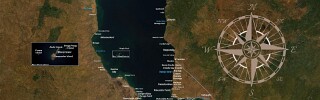
Lake Malawi from space
Considering the lake’s size, its diversity is equally impressive. Broadly speaking, Lake Malawi can be divided into the
following habitats:
Habitats of Lake Malawi
Sandy habitat
Areas dominated by sand, with only occasional stones that are typically rare. Although most Malawi aquarium fish come
from rocky areas, sandy habitats account for roughly 70% of the shoreline. Mbuna are uncommon here; instead, non-mbuna
cichlids (“haps”) are more numerous. Fish especially adapted to this habitat include genera such as
Lethrinops, Taeniolethrinops, and Tramitichromis. Most sand-dwellers (except the true piscivores)
feed on small organisms living in the sand as well as on plankton.
In addition to the groups mentioned above, you may also encounter “haps” such as Fossorochromis rostratus
(an omnivore), various species of Lethrinops and Taeniolethrinops that feed by “filtering” sand,
and Copadichromis species that feed on zooplankton. In slightly deeper water, snails are often present—one of the
best-known is the Lanistes (Lanisticola) snail—and in such shell areas you may also find the somewhat “special” mbuna
Pseudotropheus livingstoni, which lives among these snail shells.
This is the best-studied zone of Lake Malawi and the source of most Malawi cichlids kept in aquaria. Water in this habitat
is often crystal clear. The rocky habitat is dominated by mbuna, which have evolved extremely well to life among massive
boulders (often weighing several tons) and countless smaller rocks. Aquatic plants are almost absent. Fish here typically
feed by scraping algae and the microorganisms living within it from rock surfaces (aufwuchs).
Two well-known aufwuchs-feeding specialists are Labeotropheus trewavasae and Labeotropheus fuelleborni,
recognizable by their characteristic mouth shape.
Besides mbuna, some other species also occur in this habitat, such as Protomelas taeniolatus (also an algae feeder),
Placidochromis milomo (which picks small invertebrates from rock surfaces), as well as predators such as
Nimbochromis linni and Tyrannochromis macrostoma. Many species that live primarily in sandy or intermediate
habitats also migrate into rocky areas to spawn.
This is the zone where sandy and rocky habitats meet. Many fish—both mbuna and non-mbuna—occur here. They mainly feed on
algae and bottom-living organisms, making this one of the richest zones in terms of available food. Some mbuna even prefer
this habitat over pure rock (for example Pseudotropheus lucerna). A very common group in this habitat are
Aulonocara species, which feed primarily on invertebrates.
This habitat can be divided into two parts: open water near the shoreline and open water far from shore. The offshore zone
is inhabited by fish that are not cichlids—for example Engraulicypris sardella (the Malawi sardine). In open water
closer to shore, you may find cichlids such as the “utaka” (Copadichromis).
Deep water
Deep-water zones range roughly from 30 m down to about 200–250 m. Below that, conditions become unsuitable for fish life.
In the deepest parts of this zone you may find genera such as Diplotaxodon, Alticorpus,
Pallidochromis, and Rhamphochromis. None of these are particularly common or suitable for typical aquarium keeping.
At depths shallower than about 40 m, representatives of Lethrinops and Mylochromis occur. Where snails are
abundant, Pseudotropheus livingstonii and Pseudotropheus elegans may dominate. Predators at these depths include
species from the genera Buccochromis, Taeniochromis holotaenia, and Champsochromis caeruleus.
From roughly 40–75 m, dominant species include Lethrinops microdon and other deep-water Lethrinops forms, along with
snail-feeders (e.g. Lethrinops mylodon and Mylochromis anaphyrmus) and plankton feeders such as
Copadichromis virginalis. Predators here include Otopharynx speciosus and Sciaenochromis benthicola.
Species living in mid-depths—such as some Rhamphochromis and Diplotaxodon—often appear in fishing nets. Fishing pressure
has significantly reduced populations at these depths, and some species have disappeared entirely.
Deeper than about 75 m, haplochromines tend to dominate, feeding mainly on invertebrates.
River mouths and shoreline vegetation
In addition to fish that live around river mouths (such as Tilapia, Astatotilapia, and Serranochromis),
these areas host many non-mbuna species. Common plants include Vallisneria and Ceratophyllum, and also
Potamogeton. Among haplochromines, Protomelas similis feeds on the leaves of these plants, while other species graze on algae
growing on leaf surfaces (for example Hemitilapia oxyrhynchus and Cyathochromis obliquidens).
Species such as Placidochromis johnstonii and Protomelas kirkii feed on small invertebrates trapped among vegetation.
Dimidiochromis compressiceps is a characteristic predator that feeds on small fish in and around plant stands.
Beautiful underwater footage of Lake Malawi habitats
malawi.si
Lake Malawi cichlids — species, locations & maps.
All images are used with permission of the authors. Unauthorized use is prohibited.
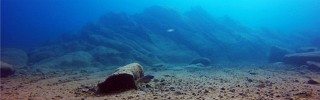
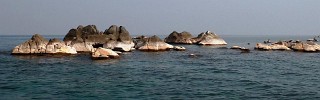
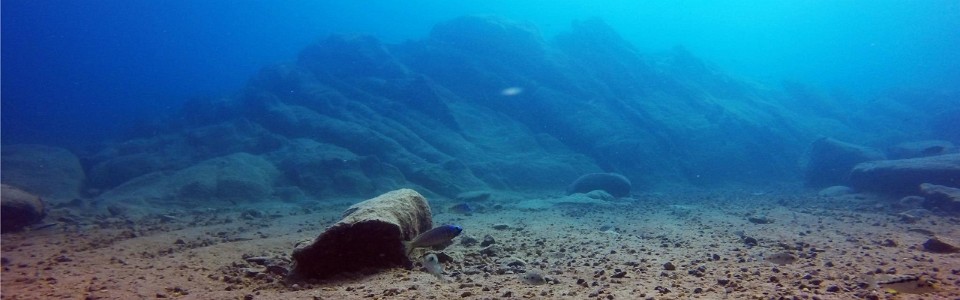




Lake Malawi (Mara Rocks); Photo: © by Marc Boulton
Lake Malawi (also known as Lake Nyasa) lies in southeastern Africa. From south to north it stretches about 580 km, with a maximum width of 75 km. It is Africa’s third-largest lake by surface area (approximately 29,600 km²), and its maximum depth is 706 m. The lake borders three countries and has about 1,600 km of shoreline. The largest share of the shoreline belongs to Malawi, while the rest is shared by Mozambique and Tanzania.
The lake is fairly unique in terms of water chemistry. It has a high pH (7.8 to 8.5), and carbonate hardness (KH, 6–8 dKH) is higher than general hardness (GH, 3–5 dGH). Water temperature ranges from about 23°C to 28°C throughout the year.
Considering the lake’s size, its diversity is equally impressive. Broadly speaking, Lake Malawi can be divided into the following habitats:
Habitats of Lake Malawi
Sandy habitat
Areas dominated by sand, with only occasional stones that are typically rare. Although most Malawi aquarium fish come from rocky areas, sandy habitats account for roughly 70% of the shoreline. Mbuna are uncommon here; instead, non-mbuna cichlids (“haps”) are more numerous. Fish especially adapted to this habitat include genera such as Lethrinops, Taeniolethrinops, and Tramitichromis. Most sand-dwellers (except the true piscivores) feed on small organisms living in the sand as well as on plankton.
In addition to the groups mentioned above, you may also encounter “haps” such as Fossorochromis rostratus (an omnivore), various species of Lethrinops and Taeniolethrinops that feed by “filtering” sand, and Copadichromis species that feed on zooplankton. In slightly deeper water, snails are often present—one of the best-known is the Lanistes (Lanisticola) snail—and in such shell areas you may also find the somewhat “special” mbuna Pseudotropheus livingstoni, which lives among these snail shells.
Rocky habitat
This is the best-studied zone of Lake Malawi and the source of most Malawi cichlids kept in aquaria. Water in this habitat is often crystal clear. The rocky habitat is dominated by mbuna, which have evolved extremely well to life among massive boulders (often weighing several tons) and countless smaller rocks. Aquatic plants are almost absent. Fish here typically feed by scraping algae and the microorganisms living within it from rock surfaces (aufwuchs).
Two well-known aufwuchs-feeding specialists are Labeotropheus trewavasae and Labeotropheus fuelleborni, recognizable by their characteristic mouth shape.
Besides mbuna, some other species also occur in this habitat, such as Protomelas taeniolatus (also an algae feeder), Placidochromis milomo (which picks small invertebrates from rock surfaces), as well as predators such as Nimbochromis linni and Tyrannochromis macrostoma. Many species that live primarily in sandy or intermediate habitats also migrate into rocky areas to spawn.
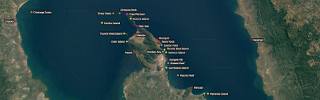
Bottom left: Ababi Island (Mbenji Islands); bottom right: Machili Island; Photos: © by Pete Barnes
Intermediate habitat
This is the zone where sandy and rocky habitats meet. Many fish—both mbuna and non-mbuna—occur here. They mainly feed on algae and bottom-living organisms, making this one of the richest zones in terms of available food. Some mbuna even prefer this habitat over pure rock (for example Pseudotropheus lucerna). A very common group in this habitat are Aulonocara species, which feed primarily on invertebrates.
Open water
This habitat can be divided into two parts: open water near the shoreline and open water far from shore. The offshore zone is inhabited by fish that are not cichlids—for example Engraulicypris sardella (the Malawi sardine). In open water closer to shore, you may find cichlids such as the “utaka” (Copadichromis).
Deep water
Deep-water zones range roughly from 30 m down to about 200–250 m. Below that, conditions become unsuitable for fish life.
In the deepest parts of this zone you may find genera such as Diplotaxodon, Alticorpus, Pallidochromis, and Rhamphochromis. None of these are particularly common or suitable for typical aquarium keeping.
At depths shallower than about 40 m, representatives of Lethrinops and Mylochromis occur. Where snails are abundant, Pseudotropheus livingstonii and Pseudotropheus elegans may dominate. Predators at these depths include species from the genera Buccochromis, Taeniochromis holotaenia, and Champsochromis caeruleus.
From roughly 40–75 m, dominant species include Lethrinops microdon and other deep-water Lethrinops forms, along with snail-feeders (e.g. Lethrinops mylodon and Mylochromis anaphyrmus) and plankton feeders such as Copadichromis virginalis. Predators here include Otopharynx speciosus and Sciaenochromis benthicola. Species living in mid-depths—such as some Rhamphochromis and Diplotaxodon—often appear in fishing nets. Fishing pressure has significantly reduced populations at these depths, and some species have disappeared entirely.
Deeper than about 75 m, haplochromines tend to dominate, feeding mainly on invertebrates.
River mouths and shoreline vegetation
In addition to fish that live around river mouths (such as Tilapia, Astatotilapia, and Serranochromis), these areas host many non-mbuna species. Common plants include Vallisneria and Ceratophyllum, and also Potamogeton. Among haplochromines, Protomelas similis feeds on the leaves of these plants, while other species graze on algae growing on leaf surfaces (for example Hemitilapia oxyrhynchus and Cyathochromis obliquidens). Species such as Placidochromis johnstonii and Protomelas kirkii feed on small invertebrates trapped among vegetation. Dimidiochromis compressiceps is a characteristic predator that feeds on small fish in and around plant stands.
Beautiful underwater footage of Lake Malawi habitats