Shallow intermediate habitat among small and medium-sized rocks,
from the extreme shallows down to about 9 m depth.
Geographic distribution:
Endemic to Chizumulu Island in Lake Malawi.
Typical adult size:
Up to approximately 10–11 cm total length.
Sexual dimorphism:
Males are larger, more intensely blue and have longer fins than
females.
Aquarium setup:
Provide abundant rockwork with crevices and caves to
allow establishment of feeding territories and spawning sites.
Diet:
Herbivorous “dolphin mbuna” feeding on aufwuchs. The elongated,
narrow snout enables feeding from deep crevices, and algae are
gripped using the sides of the pointed jaws.
Breeding:
Maternal mouthbrooder. Males defend territories, often centred
around a crevice or cave. Incubation lasts about three weeks, after which the female releases the fry and may guard
them for a short period.
Aggression:
Territorial and aggressive intraspecifically and towards other
species. Both males and some females defend feeding territories.
Special notes:
Member of the “dolphin mbuna” group characterized by an elongated,
beak-like snout adapted for feeding within rock crevices. The species
was named for its resemblance to the bottlenose dolphin
Tursiops truncatus.
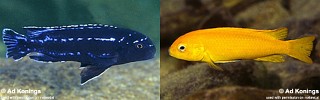
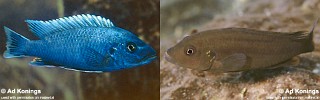
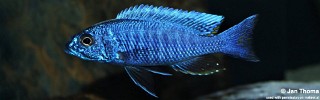
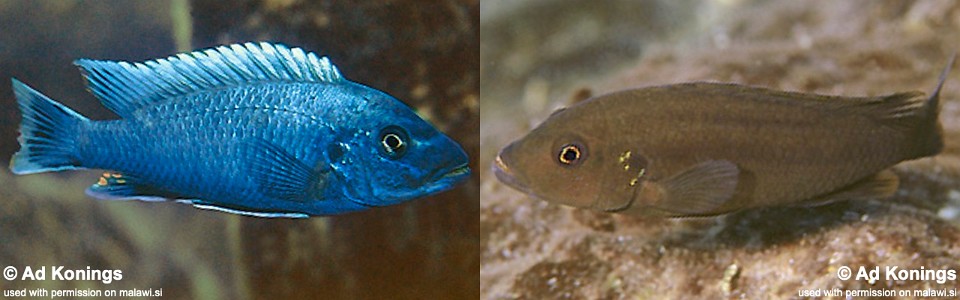




Photo gallery