Wave-washed rocky habitat with medium-sized rounded rocks in sediment-free
areas, most common from the surface to about 6 m depth, with rare
records down to 19 m.
Geographic distribution:
Likoma Island, Chizumulu Island and the Nankumba Peninsula between
Tsano Rock and Zambo Point in Lake Malawi. An introduced population
from Likoma Island is established at Thumbi West Island.
Typical adult size:
Approximately 11–13 cm TL.
Sexual dimorphism:
Males are larger, with longer fins and larger anal ocelli. Males show a metallic
grey body with a warm ochre to orange patch on the head and anterior
region, while females are differently colored and resemble those of
Tropheops macrophthalmus.
Recommended aquarium size:
An aquarium volume of at least 400 L is recommended, with a minimum
tank length of around 2 m to maintain more than one active male.
Aquarium setup:
Provide abundant rock structures with numerous shelters and open sandy
areas. A strong water current is required. Water should be alkaline and
moderately hard, maintained with regular water changes and filter
cleaning.
Diet:
Feeds mainly on algal bio-cover (aufwuchs) and plankton. It crops attached
algae using tightly set teeth and characteristic body jerks to dislodge
filamentous growth. In aquarium, a diet rich in vegetable matter is
required.
Breeding:
Maternal mouth-brooder. Males excavate a pit beneath a stone and court
females by displaying and quivering movements before leading them to
the spawning site. Spawning lasts several hours, with egg deposition
taking less than one hour. Incubation lasts about 3 weeks.
Aggression:
Highly territorial and very aggressive, especially toward conspecific males.
Males defend the upper surfaces of rocks and chase intruders from their
territories.
Special notes:
Distinguished by a high, squarish body and angular head. The bright orange
patch on the head and shoulders of males has given rise to the name “red cheek”.
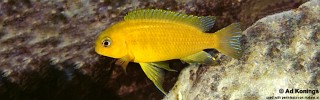
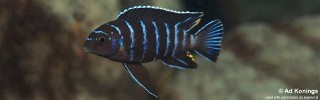
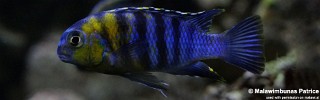
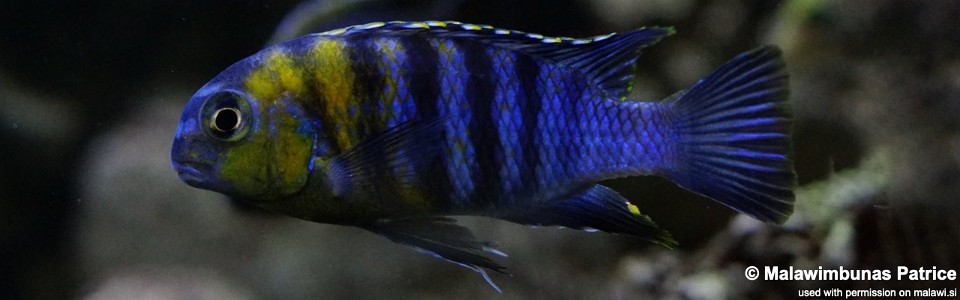




Photo gallery