Intermediate and rocky environments; typically shallow water. Recorded
down to 5 m.
Geographic distribution:
Occurs at Chizumulu Island and Taiwanee Reef; reported from
Chiwi Rocks, Linganjala Reef, Machili Island, Membe Island, Mkanila Bay,
Same Bay, and Taiwanee Reef.
Typical adult size:
Males to about 16 cm total length; females rarely exceed about
14 cm. Another reported maximum total length is approximately
18 cm.
Sexual dimorphism:
Adult males are light blue with orange body markings and an orange
lower half of the head; females are overall orange-brown with eight dark
brown vertical bars.
Recommended aquarium size:
600 L; a minimum tank length of about 200 cm is advised.
Aquarium setup:
Rockwork with caves for retreats, including shelters the female can
enter but that are too small for the male. Avoid keeping more than one
male in the same aquarium. Choose tankmates that do not resemble the male
breeding coloration; provide sufficient hiding places for females. A
mouth-brooding female can be separated from the male until fry are
released.
Diet:
Herbivorous aufwuchs grazer; scrapes algae from rock surfaces. Uses
a specialized raking technique to harvest diatoms and other small algae
embedded in the aufwuchs matrix, leaving clearly cleaned substrate
patches.
Breeding:
Maternal mouthbrooder. Breeding males defend territories about
5 m in diameter centered on a spawning site, usually a cave with an
entrance at the top among rocks. Spawning occurs inside the cave; females
may visit several males. Females incubate for about three weeks, then
release and abandon the fry, which begin feeding from aufwuchs almost
immediately.
Aggression:
Very aggressive within the species, especially males; generally
tolerant toward other species. Males are likely to be permanently
territorial.
Special notes:
Typically found in shallow, calm water rather than wave-washed zones;
at Chizumulu Island it is rarely seen deeper than 5 m, while at
Taiwanee Reef it occurs to about 15 m. Prefers clear water and avoids
sediment-rich areas; often browses algae from horizontal surfaces of large
boulders. Easily identified by a downward-opening mouth and distinctly
retrognathous jaws; lacks a dark submarginal band in the dorsal fin.
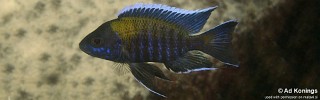
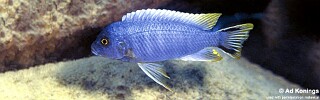
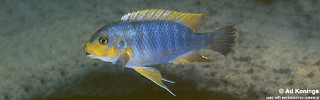
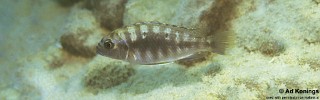
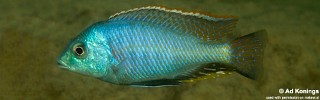
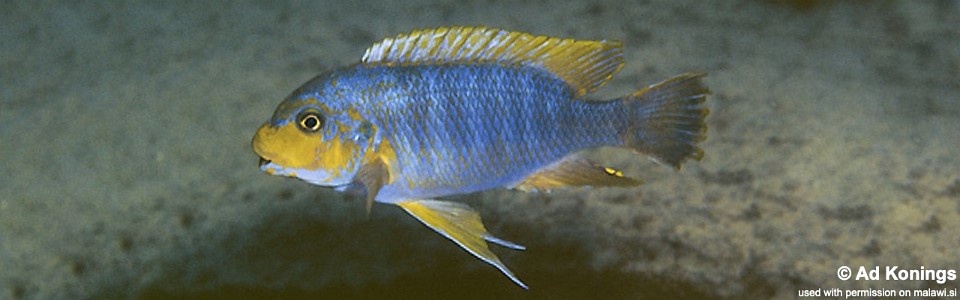




Photo gallery