Shallow intermediate habitat, occurring from less than 5 m down
to about 12 m depth.
Geographic distribution:
Northwestern coast of Lake Malawi between Kande Island and Chilumba.
Typical adult size:
Approximately 11 cm total length in the wild.
Sexual dimorphism:
Males are larger and bluer than females.
Recommended aquarium size:
An aquarium volume of at least 500 L or more is recommended.
Aquarium setup:
Provide extensive rockwork with caves and strong visual barriers.
To keep more than one active male, a minimum tank length of around 2 m is necessary.
Diet:
Primarily feeds on loose aufwuchs. In the aquarium, a ballast-rich,
not overly nutritious diet is preferred to help prevent digestive
problems.
Breeding:
Maternal mouthbrooder. Males defend territories and spawning follows
typical mbuna circular courtship, after which the female incubates the
brood alone.
Aggression:
Highly aggressive and territorial, with both males and females
defending feeding territories and algal gardens.
Special notes:
A member of the “dolphin mbuna” group. It has a shorter, broader snout
than P. tursiops and related species, and males are dark
blue. Pseudotropheus fuscoides is treated as synonymous with
this species.
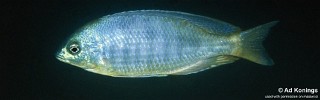
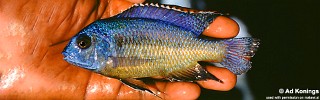
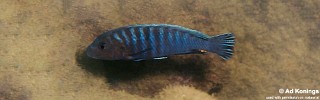
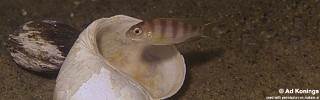
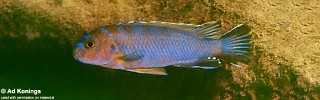
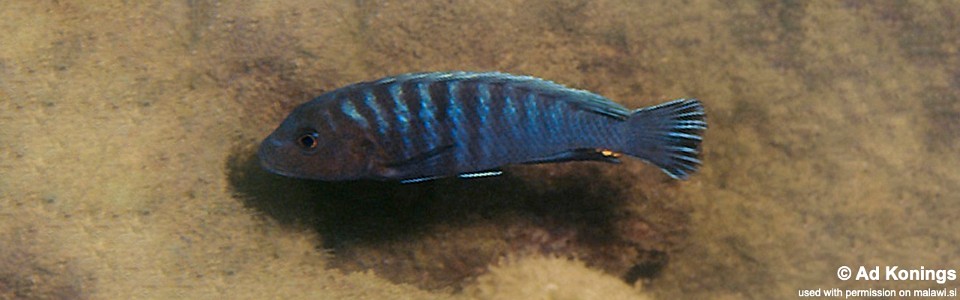




Photo gallery